A reader asks:
As a fan of your blog, I had a quick question that I was hoping I could get your advice on. I’m a 20 year old male, living in Australia where it’s currently a Wednesday night. On Saturday night I will be attending the final session of a fitness and self protection course I signed up to at college. According to friends of mine who had done the course before, the final session is akin to basic training for army recruits! (Here’s where you come in)
I’ve been told by friends that practically from Saturday night to Sunday lunch time they deprive you of sleep and run you through non stop intense fitness exercises like running, push-ups, sit-ups etc.
What I was thinking of doing was perhaps changing my sleeping pattern so my body will effectively not be missing out on sleep. Let’s say I stayed up tomorrow night (Thursday night), slept all of Friday, stayed up all Friday night, and slept all Saturday - come Saturday night my body will expect to be awake and it won’t be as gruelling – right? Would this be effective? Is this enough time for my body to adjust or would I just be making things worse?
It's too short of a time for you to adjust your biological clock- the body is only capable of adjusting 1 hr each day. You are essentially facing 2 problems- 1) sleep deprivation and 2) circadian rhythm dysfunction (you will be expected to be active during a time when your body expects you to be asleep).
I recommend that you keep your normal sleep schedule and then try to take a 2-3 hour nap right before your final course begins. If allowed during your course, caffeine and Provigil would be helpful. Bright light exposure during your course, if possible, would also be helpful.
Hope this helps
Michael Rack, MD
Wednesday, June 06, 2007


Tuesday, June 05, 2007
Saturday, June 02, 2007
Treatment of Alcohol-related sleep disorders
The following is from an article I wrote for Medlink Neurology on "Sleep disorders associated with alcohol use and abuse." It is copyrighted by Medlink Neurology:
For the sleep disorders occurring during alcohol intake, cessation of alcohol use is often the only necessary treatment. Treatment of the sleep apnea exacerbated by alcohol requires avoidance of alcohol intake at least for 4 hours to 6 hours before going to bed. If the apnea does not resolve with alcohol cessation, then standard treatments for obstructive sleep apnea, such as nasal continuous positive airway pressure, are required. The hypersomnia that can occur with alcohol use is usually eliminated after 1 day or 2 days without alcohol, but insomnia may actually worsen for the first 2 weeks to 7 weeks off alcohol. It is important not to restart the alcohol even at a low dose to ameliorate this problem; similarly, use of hypnotics is contraindicated because of the cross-tolerance with alcohol and the potential for both abuse and dependence. Sedating antihistamines or low doses of sedating antidepressants can be used for temporary relief when insomnia episodes are particularly severe. Patients should be reassured that in most cases the insomnia gradually gets better.
Behavioral treatments for insomnia with good sleep hygiene, relaxation training, desensitization, or sleep restriction should be used during the withdrawal period. If evidence develops for depression then a sedating antidepressant (eg, amitriptyline or mirtazapine) may be helpful for both sleep and depression.
As mentioned above, sleep abnormalities in alcoholics can persist for several years after alcohol cessation; this sleep disturbance may contribute to relapse of alcoholism. Various medications and psychotherapy techniques have been used to treat this sleep disturbance. Gabapentin, at doses of 300 mg to 1800 mg at bedtime, is useful in treating insomnia in abstinent alcohol-dependent outpatients and appears to be more effective than trazodone (Karam-Hage and Brower 2003). Although quetiapine is of potential benefit for this condition (Monnelly et al 2004; Sattar et al 2004), the risk of tardive dyskinesia and metabolic abnormalities associated with the use of atypical antipsychotics suggests that they should be used cautiously, if at all, for insomnia. Cognitive-behavioral treatments, including stimulus control, sleep restriction, and cognitive restructuring, have been shown to improve subjective sleep quality in recovering alcoholics (Currie et al 2004).
The melatonin receptor agonist Ramelteon (Rozerem-Takeda) is an option for treating insomnia in recovering alcoholics, though controlled trials are lacking. Ramelteon is not a controlled substance, and has essentially no abuse liability (Anonymous 2005; Griffiths and Johnson 2005). It is approved for the treatment of insomnia characterized by difficulty with sleep onset (Laustsen and Andersen 2006). The standard dose is 8 mg, taken within 30 minutes of going to bed. It is metabolized by cytochrome p450 enzyme 1A2 but does not appear to inhibit or induce this enzyme (Laustsen and Andersen 2006). It should not be used in combination with fluvoxamine, a strong 1A2 inhibitor (Takeda Pharmaceuticals 2005).
Acamprosate (Campral- Forest Pharmaceuticals) is a glutamate modulator that is FDA-approved for the maintenance of abstinence from alcohol in patients with alcohol dependence who are abstinent at treatment initiation (Forest Pharmaceuticals 2005). A recent parallel double-blind placebo-controlled study found that acamprosate improved sleep quality during early abstinence (Staner et al 2006).
disclaimer: this is not the final edited version that will appear in Medlink Neurology. I encourage you to check out the website for Medlink Neurology for the full version of this article as well as numerous other articles about sleep (a few written by me).
For the sleep disorders occurring during alcohol intake, cessation of alcohol use is often the only necessary treatment. Treatment of the sleep apnea exacerbated by alcohol requires avoidance of alcohol intake at least for 4 hours to 6 hours before going to bed. If the apnea does not resolve with alcohol cessation, then standard treatments for obstructive sleep apnea, such as nasal continuous positive airway pressure, are required. The hypersomnia that can occur with alcohol use is usually eliminated after 1 day or 2 days without alcohol, but insomnia may actually worsen for the first 2 weeks to 7 weeks off alcohol. It is important not to restart the alcohol even at a low dose to ameliorate this problem; similarly, use of hypnotics is contraindicated because of the cross-tolerance with alcohol and the potential for both abuse and dependence. Sedating antihistamines or low doses of sedating antidepressants can be used for temporary relief when insomnia episodes are particularly severe. Patients should be reassured that in most cases the insomnia gradually gets better.
Behavioral treatments for insomnia with good sleep hygiene, relaxation training, desensitization, or sleep restriction should be used during the withdrawal period. If evidence develops for depression then a sedating antidepressant (eg, amitriptyline or mirtazapine) may be helpful for both sleep and depression.
As mentioned above, sleep abnormalities in alcoholics can persist for several years after alcohol cessation; this sleep disturbance may contribute to relapse of alcoholism. Various medications and psychotherapy techniques have been used to treat this sleep disturbance. Gabapentin, at doses of 300 mg to 1800 mg at bedtime, is useful in treating insomnia in abstinent alcohol-dependent outpatients and appears to be more effective than trazodone (Karam-Hage and Brower 2003). Although quetiapine is of potential benefit for this condition (Monnelly et al 2004; Sattar et al 2004), the risk of tardive dyskinesia and metabolic abnormalities associated with the use of atypical antipsychotics suggests that they should be used cautiously, if at all, for insomnia. Cognitive-behavioral treatments, including stimulus control, sleep restriction, and cognitive restructuring, have been shown to improve subjective sleep quality in recovering alcoholics (Currie et al 2004).
The melatonin receptor agonist Ramelteon (Rozerem-Takeda) is an option for treating insomnia in recovering alcoholics, though controlled trials are lacking. Ramelteon is not a controlled substance, and has essentially no abuse liability (Anonymous 2005; Griffiths and Johnson 2005). It is approved for the treatment of insomnia characterized by difficulty with sleep onset (Laustsen and Andersen 2006). The standard dose is 8 mg, taken within 30 minutes of going to bed. It is metabolized by cytochrome p450 enzyme 1A2 but does not appear to inhibit or induce this enzyme (Laustsen and Andersen 2006). It should not be used in combination with fluvoxamine, a strong 1A2 inhibitor (Takeda Pharmaceuticals 2005).
Acamprosate (Campral- Forest Pharmaceuticals) is a glutamate modulator that is FDA-approved for the maintenance of abstinence from alcohol in patients with alcohol dependence who are abstinent at treatment initiation (Forest Pharmaceuticals 2005). A recent parallel double-blind placebo-controlled study found that acamprosate improved sleep quality during early abstinence (Staner et al 2006).
disclaimer: this is not the final edited version that will appear in Medlink Neurology. I encourage you to check out the website for Medlink Neurology for the full version of this article as well as numerous other articles about sleep (a few written by me).
Saturday, May 19, 2007
I don't know much about beds

Occasionally a patient will complain about their mattress or ask me what type of matress I recommend.
I don't have a clue. Mattresses were not covered in medical school, residency, or fellowship.
A good, comfortable mattress is probably important for sleep-but my patients are better off asking a matress salesman than me. If you live in Mississippi, you might want to try Miskellys
I don't have a clue. Mattresses were not covered in medical school, residency, or fellowship.
A good, comfortable mattress is probably important for sleep-but my patients are better off asking a matress salesman than me. If you live in Mississippi, you might want to try Miskellys
Tuesday, April 17, 2007
idiopathic hypersomnia
A reader (Claire) asks: "However he has been unable to diagnose or treat my particular sleep problem and I can find no info anywhere that describes my particular symptoms.I find so much research has been done in some areas but not enough in others in regards to sleep.My problem; I sleep if allowed 10hours a day but am constantly tired. 2 afternoon naps not unusual, but I don’t fall asleep randomly..."
-------------------------------------------------
If a sleep study (polysomnogram) is negative, you may have idiopathic hypersomnia. Consider asking your primary care doctor for a referral to a sleep specialist.
-------------------------------------------------
If a sleep study (polysomnogram) is negative, you may have idiopathic hypersomnia. Consider asking your primary care doctor for a referral to a sleep specialist.
REM-related obstructive sleep apnea
A reader (Franto) asks "Sorry to butt in with this question for you! I had a recent sleep study that showed I am getting v little REM sleep because I start getting hypopneic as soon as I enter into REM and have an arousal. Overall there was little obstruction and no apnea (lowest O2 sat was 91%). The problem was entirely REM specific, and I had good deep sleep. My total REM percentage was only 6.5%. There apparently were several aborted REM episodes. The reason I had the study done was that I have been having unrefreshing sleep and working memory issues for a few years now! My sleep physician wants me to do CPAP study to see if it helps improve my REM. My Q to you is if you see cases like mine at all, since I havent read about such a selective REM condition on the web or Pubmed. I know about UARS but that too involves both REM and NREM. Would CPAP help in such a situation?"
_____________________
Some people have OSA primarily during REM sleep. I found the following in Sleep Medicine Pearls, by Richard B. Berry, MD (2nd edition, page 118):
In patients with excessive daytime sleepiness and significant, REM-specific sleep apnea, treatment is indicated. Other possible causes of daytime sleepiness should be excluded.
The reason for the higher AHI during REM sleep are commplex. REM sleep is not homogenous, and episodes of decreased upper airway muscle activity or ventilatory drive may be the cause of hypopneas or apneas during REM sleep.
In my experience, in many people, OSA is worse during REM sleep. It is unusual for sleep apnea to occur exclusively during REM, but it is possible. I think your sleep physician's advice is reasonable and CPAP is worth a try.
_____________________
Some people have OSA primarily during REM sleep. I found the following in Sleep Medicine Pearls, by Richard B. Berry, MD (2nd edition, page 118):
In patients with excessive daytime sleepiness and significant, REM-specific sleep apnea, treatment is indicated. Other possible causes of daytime sleepiness should be excluded.
The reason for the higher AHI during REM sleep are commplex. REM sleep is not homogenous, and episodes of decreased upper airway muscle activity or ventilatory drive may be the cause of hypopneas or apneas during REM sleep.
In my experience, in many people, OSA is worse during REM sleep. It is unusual for sleep apnea to occur exclusively during REM, but it is possible. I think your sleep physician's advice is reasonable and CPAP is worth a try.
Friday, March 30, 2007
Drowsy Driving


According to the National Sleep Foundation, drowsy driving causes over 100,000 motor vehicle accidents, 71,000 injuries, and 1550 deaths each year. Common causes of drowsy driving include chronic sleep deprivation and untreated sleep disorders, such as obstructive sleep apnea.
A commercial driver’s extended hours of operation can create a scenario of continuous sleep deprivation. Difficulties in adjusting to varying shifts and rotating work schedules can compound the problem. The average adult needs 7 to 9 hours of sleep each day, and it is important to allow for sufficient sleep time. For those who have trouble adjusting to unusual work hours or rotating shifts, medication and/or bright light therapy are sometimes helpful.
Obstructive sleep apnea is present in 2-4% of the middle-aged population. It is more common in commercial drivers due to the high rate of obesity in this population. Obstructive sleep apnea is a disorder in which apneas (breathing pauses) occur during sleep. It is normal for the tissues of the upper airway to be somewhat collapsible during sleep, but in obstructive sleep apnea this tendency is exaggerated. Common symptoms of obstructive sleep apnea include loud snoring, daytime sleepiness, memory/concentration difficulties, and erectile dysfunction. The most common treatment for obstructive sleep apnea is continuous positive airway pressure (CPAP), in which pressurized air is delivered through a nasal mask to the upper airways. The pressurized air acts as a pneumatic splint for the upper airways. Other treatments for obstructive sleep apnea include dental appliances and ENT surgery.
Driving while sleepy is a serious problem, especially for commercial drivers. Any commercial driver with snoring or daytime sleepiness should be evaluated by a sleep specialist to ensure their, and the public’s, safety while driving.
A commercial driver’s extended hours of operation can create a scenario of continuous sleep deprivation. Difficulties in adjusting to varying shifts and rotating work schedules can compound the problem. The average adult needs 7 to 9 hours of sleep each day, and it is important to allow for sufficient sleep time. For those who have trouble adjusting to unusual work hours or rotating shifts, medication and/or bright light therapy are sometimes helpful.
Obstructive sleep apnea is present in 2-4% of the middle-aged population. It is more common in commercial drivers due to the high rate of obesity in this population. Obstructive sleep apnea is a disorder in which apneas (breathing pauses) occur during sleep. It is normal for the tissues of the upper airway to be somewhat collapsible during sleep, but in obstructive sleep apnea this tendency is exaggerated. Common symptoms of obstructive sleep apnea include loud snoring, daytime sleepiness, memory/concentration difficulties, and erectile dysfunction. The most common treatment for obstructive sleep apnea is continuous positive airway pressure (CPAP), in which pressurized air is delivered through a nasal mask to the upper airways. The pressurized air acts as a pneumatic splint for the upper airways. Other treatments for obstructive sleep apnea include dental appliances and ENT surgery.
Driving while sleepy is a serious problem, especially for commercial drivers. Any commercial driver with snoring or daytime sleepiness should be evaluated by a sleep specialist to ensure their, and the public’s, safety while driving.
Thursday, March 29, 2007
Why do we Sleep?

Sleep is not an optional enterprise. All mammals do it. So do birds, reptiles, and even fruit flies. Rats deprived of sleep apparently die faster than those deprived of food. Sleep deprivation is a ruthlessly effective means of torture, as the new movie The Lives of Others shows in a stomach-turning scene. Yet the bedrock question—what purpose does sleep serve for us and the rest of the animal kingdom—remains oddly unsettled.
no one knows exactly what the underlying need is.
This Slate article discusses the theory that sleep plays a role in memory consolidation.
Ambien is going Generic Soon
Patients suffering from insomnia may soon sleep better for less thanks to the pending expiration of patents on a number of widely used prescription drugs. This year alone, 10 brand-name medications with revenue exceeding $8.1 billion are expected to lose patent exclusivity, including the widely prescribed sleep medication Ambien (zolpidem tartrate).
Ambien CR is being pushed due to the impending patent expiration of Ambien. Ambien works great for patients who have trouble falling asleep at the beginning of the night, but Ambien CR is better for patients with middle-of-the-night awakenings.
Ambien CR is being pushed due to the impending patent expiration of Ambien. Ambien works great for patients who have trouble falling asleep at the beginning of the night, but Ambien CR is better for patients with middle-of-the-night awakenings.
Sunday, March 11, 2007
Separate Bedrooms
The New York Times reports that many couples sleep in separate bedrooms, often due to either snoring or restless sleep:
According to the National Sleep Foundation in Washington, 75 percent of adults frequently either wake in the night or snore — and many have taken to separate beds just for those reasons. In a report issued Tuesday, the foundation found that more than half the women surveyed, ages 18 to 64, said they slept well only a few nights a week; 43 percent believed their lack of sleep interfered with the next day’s activities.
Stephanie Coontz, director of public education for the Council of Contemporary Families in Chicago, said many couples she interviewed were “confident enough that they have a nice marriage, but they don’t particularly like sleeping in the same room.”
“I don’t think it says anything about their sex lives,” Ms. Coontz said.
According to the National Sleep Foundation in Washington, 75 percent of adults frequently either wake in the night or snore — and many have taken to separate beds just for those reasons. In a report issued Tuesday, the foundation found that more than half the women surveyed, ages 18 to 64, said they slept well only a few nights a week; 43 percent believed their lack of sleep interfered with the next day’s activities.
Stephanie Coontz, director of public education for the Council of Contemporary Families in Chicago, said many couples she interviewed were “confident enough that they have a nice marriage, but they don’t particularly like sleeping in the same room.”
“I don’t think it says anything about their sex lives,” Ms. Coontz said.
Saturday, March 03, 2007
New Sleep Medicine Board Examinations

It's time to register for the sleep medicine examinations. Pretty much everyone with sleep experience is elgible during the "grandfathering" period. For internists/pulmonologists, you can find out more info here. The early registration period is March 1 to May 1 2007. Here is the site for psychiatrists/neurologists. Here is the site for ENT physicians. This is the site for pediatricians.
------------------------------------------------------------
Family practitioners are out of luck for now; their board is not yet sponsoring the new examination.
---------------
The cost of the exam for those whose primary board is the American Board of Internal Medicine is $1575. The application was very easy- took me about 2 minutes online, and it will take me about another minute to fax my sleep board certification certificate (from the old certifying organization) to the American Board of Internal Medicine.
----------------------------
The American Academy of Sleep Medicine site has frequent updates about the board exams.
---------------
The cost of the exam for those whose primary board is the American Board of Internal Medicine is $1575. The application was very easy- took me about 2 minutes online, and it will take me about another minute to fax my sleep board certification certificate (from the old certifying organization) to the American Board of Internal Medicine.
----------------------------
The American Academy of Sleep Medicine site has frequent updates about the board exams.
Monday, February 26, 2007
sleep apnea and cardiovascuar disease

The evidence linking obstructive sleep apnea to cardiovascular disease continues to grow. Obstructive sleep apnea (OSA) is a thought to be a risk factor for the development of hypertension, stroke, coronary artery disease, and congestive heart failure. The evidence is strongest for hypertension. A recent study adds to the evidence linking OSA to stroke:
But the real question, Dr. Mohsenin said, is whether there is an independent association between sleep apnea and stroke, and a recent study on which he was an author shows that there is indeed such an association.
In the observational cohort study of 697 patients with obstructive sleep apnea and 325 controls (mean apnea-hypopnea index of 35 vs. 2 in the patients and controls, respectively), obstructive sleep apnea was found to have a statistically significant association with stroke or death (hazard ratio of 1.91) after adjustment for numerous factors, including age, sex, race, smoking status, alcohol consumption, body mass index, diabetes, hyperlipidemia, atrial fibrillation, and hypertension.
A trend analysis also showed a significant dose-response relationship between sleep apnea severity at baseline and development of a composite end point of stroke or death from any cause (N. Engl. J. Med. 2005;353:2034–41).
While randomized controlled trials are needed to firmly establish a causal link between sleep apnea and stroke—to “put the last nail in the coffin and say, ‘ok, sleep apnea is indeed a cause of stroke in a high-risk patient population,’” as Dr. Mohsenin put it, the findings increasingly suggest this is the case. Also, sleep apnea occurs as commonly in transient ischemic attack as it does in stroke, further underscoring the need for sleep apnea treatment in affected patients, he noted.
Additionally, a number of studies have shown that sleep apnea is associated with worse functional outcomes in stroke patients, Dr. Mohsenin said.
Patients with stroke who have sleep apnea have been shown to have more delirium, depression, impaired functional capacity, longer rehabilitation time, and longer hospitalization, he said.
“Sleep apnea does affect the outcome of stroke,” he said, noting that in some studies these effects lasted out to 12 months.
Patients who have had a stroke should be evaluated for sleep disordered breathing, he advised.
In the observational cohort study of 697 patients with obstructive sleep apnea and 325 controls (mean apnea-hypopnea index of 35 vs. 2 in the patients and controls, respectively), obstructive sleep apnea was found to have a statistically significant association with stroke or death (hazard ratio of 1.91) after adjustment for numerous factors, including age, sex, race, smoking status, alcohol consumption, body mass index, diabetes, hyperlipidemia, atrial fibrillation, and hypertension.
A trend analysis also showed a significant dose-response relationship between sleep apnea severity at baseline and development of a composite end point of stroke or death from any cause (N. Engl. J. Med. 2005;353:2034–41).
While randomized controlled trials are needed to firmly establish a causal link between sleep apnea and stroke—to “put the last nail in the coffin and say, ‘ok, sleep apnea is indeed a cause of stroke in a high-risk patient population,’” as Dr. Mohsenin put it, the findings increasingly suggest this is the case. Also, sleep apnea occurs as commonly in transient ischemic attack as it does in stroke, further underscoring the need for sleep apnea treatment in affected patients, he noted.
Additionally, a number of studies have shown that sleep apnea is associated with worse functional outcomes in stroke patients, Dr. Mohsenin said.
Patients with stroke who have sleep apnea have been shown to have more delirium, depression, impaired functional capacity, longer rehabilitation time, and longer hospitalization, he said.
“Sleep apnea does affect the outcome of stroke,” he said, noting that in some studies these effects lasted out to 12 months.
Patients who have had a stroke should be evaluated for sleep disordered breathing, he advised.
That the treatment of OSA improves cardiovascular outcomes is an unproven assumption. We know that in sleep apnea patients, CPAP can improve cardiac functioning (ejection fraction) and reduce blood pressure. However, it has not been proven that CPAP improves mortality or decreases the rate of myocardial infarction. A randomized controlled trial looking at this question would be difficult to carry out.
Kleine-Levin Syndrome

Miss Hoyland, a 26-year-old youth charity worker, is one of only a handful of Britons to suffer a rare sleep disorder which can cause her to stay in bed for up to a week at a time.
She wakes only to snack on whatever food is available and visit the bathroom before relapsing into a dream-like state.
The attacks started when she was 17 and studying for her A-levels - forcing her to take weeks off school to sleep.
After graduating she was working as a sales assistant when one day she became woozy and had to sit down, then minutes later she was snoozing in the staff room.
Since then she has suffered 'sleeping episodes' for a week every two months.
Since then she has suffered 'sleeping episodes' for a week every two months.
It took a further eight years until specialists correctly diagnosed her with Kleine-Levin Syndrome, known more commonly as sleeping beauty disease.
Thought to be caused by a chemical abnormality in the base of the brain where sleep and appetite is governed, the incurable neurological disorder affects fewer than 1,000 victims worldwide.
Sufferers are often uncontrollably hungry when they awake and it can affect sex drive as well as behaviour.
There is no cure, but the condition can be treated by a combination of behavioural therapy and stimulant drugs to stay awake.
Thought to be caused by a chemical abnormality in the base of the brain where sleep and appetite is governed, the incurable neurological disorder affects fewer than 1,000 victims worldwide.
Sufferers are often uncontrollably hungry when they awake and it can affect sex drive as well as behaviour.
There is no cure, but the condition can be treated by a combination of behavioural therapy and stimulant drugs to stay awake.
Kleine-Levin Syndrome is a rare disorder (less than 200 cases reported in the literature, according to The International Classification of Sleep Disorders, 2nd edition, 2005). Episodes of sleepiness last several days to several weeks, and occur 1-10 times per year. During sleep episodes, patients sleep as much as 18 hours a day, waking or getting up only to eat and void. During episodes, binge-eating, confusion, aggression, and hypersexuality may be present.
The NINDS website has a good summary of the disorder.
I hope this patient's doctors are writing up the case and studying her polysomnographically both during and between episodes to add to the limited scientific literature about this disorder.
Monday, February 12, 2007
New Sleep Textbook
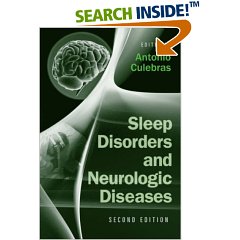
Sleep Disorders and Neurologic Diseases, Second Edition has just been published.
Here is a description:
"Entirely devoted to the relationship between sleep and brain function, and the improved management of sleep in patients with neurologic diseases, this completely updated Second Edition includes new sections on the role of hypothalamic dysfunction in narcolepsy and the emerging relationship between sleep apnea and hypertension, heart disease, and stroke. With chapters analyzing the treatment of specific disease states, this convenient guide offers recommendations for the management of primary sleep disorders, sleep disorders secondary to well-established neurological disorders, and the neurological consequences of uncontrolled sleep conditions."
------------------------------------------
I received an advance copy a few days ago and highly recommend it to sleep physicians and trainees.
Thursday, February 01, 2007
Sleep Apnea in football players
The New York times discusses the health problems of football players, including obstructive sleep apnea:
According to a 2003 study published in The New England Journal of Medicine, 14 percent of N.F.L. players had obstructive sleep apnea, a disease that impairs breathing and is known to affect large, muscular individuals like football linemen more often than people of average size. Reggie White, a Hall of Fame defensive lineman, died at 43 in 2004 after having cardiac arrhythmia, but he also had sleep apnea, which may have contributed to his death.
With more football linemen weighing much more than 300 pounds, doctors said they expected sleep apnea to become more prevalent .
“The primary treatment for sleep apnea is to lose weight, and they can’t,” said Dr. Allan Levy, an associate team physician with the Giants, who is assisting with this week’s screening. “There’s no such thing as a 225-pound offensive lineman. We try to make certain that they understand that they’ve got to come down in weight when they retire. All of my offensive lineman from the Giants’ two Super Bowl wins have all lost at least 50 pounds. They’re all in excellent health. You see some of the other guys, and they’re just huge. They’ve got all kinds of problems.
“The problem with sleep apnea is in the neck. A 17½-inch neck is usually where the problem begins. When they sleep, the muscles relax in the body. Now the weight of their neck clasps down on their airway. They stop breathing. They momentarily wake up, then the cycle starts over again, and they never get into deep sleep. They develop heart disease and hypertension. Sleep apnea is a killer. One of the kids that played for us, we did a sleep study on, had 440 awakenings during the night.”
The most common treatment for sleep apnea involves wearing a mask that supplies a stream of air through the nose during sleep.
Increased neck size and obesity are 2 major risk factors for obstructive sleep apnea.
According to a 2003 study published in The New England Journal of Medicine, 14 percent of N.F.L. players had obstructive sleep apnea, a disease that impairs breathing and is known to affect large, muscular individuals like football linemen more often than people of average size. Reggie White, a Hall of Fame defensive lineman, died at 43 in 2004 after having cardiac arrhythmia, but he also had sleep apnea, which may have contributed to his death.
With more football linemen weighing much more than 300 pounds, doctors said they expected sleep apnea to become more prevalent .
“The primary treatment for sleep apnea is to lose weight, and they can’t,” said Dr. Allan Levy, an associate team physician with the Giants, who is assisting with this week’s screening. “There’s no such thing as a 225-pound offensive lineman. We try to make certain that they understand that they’ve got to come down in weight when they retire. All of my offensive lineman from the Giants’ two Super Bowl wins have all lost at least 50 pounds. They’re all in excellent health. You see some of the other guys, and they’re just huge. They’ve got all kinds of problems.
“The problem with sleep apnea is in the neck. A 17½-inch neck is usually where the problem begins. When they sleep, the muscles relax in the body. Now the weight of their neck clasps down on their airway. They stop breathing. They momentarily wake up, then the cycle starts over again, and they never get into deep sleep. They develop heart disease and hypertension. Sleep apnea is a killer. One of the kids that played for us, we did a sleep study on, had 440 awakenings during the night.”
The most common treatment for sleep apnea involves wearing a mask that supplies a stream of air through the nose during sleep.
Increased neck size and obesity are 2 major risk factors for obstructive sleep apnea.
Friday, January 12, 2007
Some Restless Legs Medications can cause Valvular Dysfunction
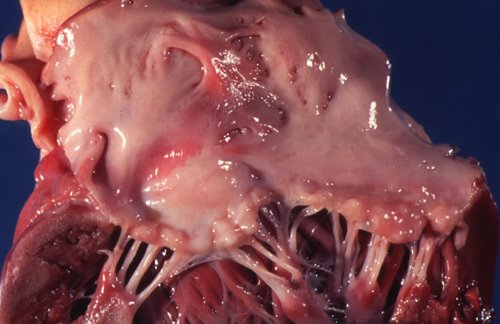
Two case-control studies published simultaneously in the January 4 issue of The New England Journal of Medicine provide some of the strongest evidence that treatment with the ergot-derived dopamine antagonists pergolide and cabergoline, commonly used in Parkinson's disease, can cause cardiac-valve dysfunction. They also suggest that the adverse effect is not caused by some other prescribed dopamine antagonists, especially those not derived from ergot.
According to a perspective by Bryan L. Roth, MD, PhD, of the University of North Carolina in Chapel Hill, that accompanies the 2 studies, the findings support prior clinical and mechanistic evidence for a link between a histologically distinct fibrotic valvulopathy and treatment with drugs that block the serotonin receptor 5-hydroxytryptamine 2B (5-HT2B). Pergolide and cabergoline have that biochemical action in common, whereas the other studied dopamine antagonists do not have significant effects on 5-HT2B, writes Dr. Roth.
Dopamine agonists are used to treat both Parkinson's disease and restless legs syndrome. The association between ergot-derived dopamine agonists and valvular dysfunction was first recognized about 5 years ago. Requip and Mirapex are the only dopamine agonists that should be used to treat restless legs syndrome.
Thursday, December 21, 2006
Nocturnal leg cramps
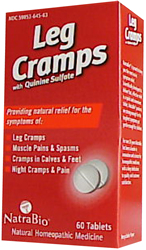
Cortlandt Forum has a nice short article on Nocturnal leg cramps:
By Russel Kirkby, MD, and Brian Alper, MD, MSPH
Description• Involuntary nighttime painful leg muscle contraction that does not relax
ICD-9 codes• 728.85 spasm of muscle • 729.82 cramp of limb
Prevalence• 95% of people sometime in their lives • Especially common in women and elderly
Most commonly affected muscle groups• Calf • Foot
Etiology• Most commonly no cause found• Possible causes (or associated conditions) include —Fluid and electrolyte imbalance: hypocalcemia, hyponatremia, hypomagnesemia, hypokalemia, hyperkalemia, chronic diarrhea, hemodialysis —Endocrine disease: thyroid disease, diabetes mellitus, Addison’s disease — Neuromuscular disease: nerve-root compression, motor-neuron disease, mononeuropathies, polyneuropathies, dystonias —Drugs: calcium channel blockers (nifedipine), diuretics, phenothiazines, fibrates, selective estro- gen receptor modulators (raloxifene), ethanol, morphine withdrawal —Toxins: lead, strychnine, spider bites —Congenital disease: McArdle’s disease, glycogen storage disease, autosomal dominant cramping disease —Peripheral vascular disease —Iron deficiency anemia —Liver cirrhosis, chronic alcoholism, sarcoidosis —HIV myelopathy• Pathophysiology speculative, may include reduced blood flow and oxygen supply
Likely precipitating factors• Activity excessive for condition of muscle• Sleeping prone or supine with toes fully extended • Pregnancy (insufficient calcium intake)• Older age
Complications• Insomnia • Irritability • Anxiety • Depression
Clinical evaluation• History of onset and clues to underlying condition• Drug history crucial• Local exam: arterial pulses, skin, nerves—Pulses and capillary fill (rule out vascular compromise) —Assess skin changes—Sensation/vibration
Differential diagnoses• Intermittent claudication• Peripheral neuritis• Restless legs syndrome• HIV myelopathy• Physiologic cramps due to heat, exercise, excessive activity• Electrolyte abnormalities: hyponatremia, hypokalemia, hypomagnesemia• Polycythemia• Endocrine disease: diabetes, thyroid disease, parathyroid disease, adrenal disease • Muscle diseases: glycogen storage or mitochondrial
Testing (for recurrences or underlying disease)• Electrolytes • Glucose • Blood urea nitrogen, creatinine • Calcium, magnesium, phosphate • Hemoglobin, ferritin • Zinc • Liver function tests • Thyroid function tests• HIV if appropriate• Doppler studies of arteries• Electromyelography
Nonpharmacologic management• Reassurance to exclude causes that might cause patients concern, e.g., vascular disease• Major thrust is to avoid sleep disturbance• Trial of omitting possible causative medication• Other treatments to consider—Local heat —Massage —Osteopathic manipulative therapy (OMT): myofascial release, facilitated positional release
Medications to consider• Quinine sulfate 200-400 mg nightly —Beware long-term use.—Rare but serious side effects described (disseminated intravascular coagulopathy, thrombocytopenia, pancytopenia, hemolytic uremic syndrome) —Consider monitoring complete blood count or platelets.• Other drugs similar to quinine —Hydroquinine 300 mg —Quinidine sulfate 400 mg• Other drugs not similar to quinine—Verapamil 120 mg nightly—Gabapentin (Neurontin) may reduce frequency and severity of muscle cramps.—Magnesium not clearly effective• Benzodiazepines (clonazepam, diazepam) or baclofen—Not traditionally associated with nocturnal cramp therapy but helpful in other spastic muscle conditions, e.g., tetanus, status epilepticus, and back muscle spasm —Address treatment goals of avoiding sleep disturbance.• Gastrocnemius trigger point injection of 1% lidocaine• Randomized n-of-1 trials alternating drug and placebo may determine efficacy of specific drugs for individual patients.
Prevention• Stretching exercises — e.g., nightly or twice daily • 20-minute walk may enhance stretching exercises.
See for www.dynamicmedical.com) references.
Quinine is the most commonly used treatment for this poorly understood condition; however with this medication cinchonism needs to be monitored for.
Tuesday, December 19, 2006
The Challenges of Treating Restless Legs Syndrome


The following case report appears in this month's Journal of General Internal Medicine (abstract below):
CASE REPORT
Medication Tolerance and Augmentation in Restless Legs Syndrome: The Need for Drug Class Rotation
Roger Kurlan, MD, Irene Hegeman Richard, MD, Cheryl Deeley, RNP
Restless legs syndrome (RLS) is a common condition characterized by an unpleasant urge to move the legs that usually occurs at night and may interfere with sleep. The medications used most commonly to treat RLS include dopaminergic drugs (levodopa, dopamine agonists), benzodiazepines, and narcotic analgesics. We report the cases of 2 patients with RLS who illustrate the problems of tolerance (declining response over time) and augmentation (a worsening of symptoms due to ongoing treatment) that can complicate the pharmacotherapy of RLS. We discuss the optimal management of RLS and propose strategies to overcome tolerance and augmentation such as a rotational approach among agents from different classes.
Tolerance and augmentation (see abstract above for definitions) were significant problems with Sinemet, which was previously commonly used to treat RLS. Tolerance and augmentation are less of a problem with the Requip and Mirapex, two dopamine agonists FDA approved for the treatment of RLS. However augmentation and tolerance still occur with these meds, and there is little research about the best way to deal with this vexing problem. I usually treat RLS initially with Requip or Mirapex monotherapy. If tolerance or augmentation occur, I first add another RLS agent (Neurontin, benzodiazepines, or opioids) and then later switch from 1 opioid agonist to another.
Wednesday, December 06, 2006
Mississippi Sleep Criminal
The case of John L. White, a Mississippi commercial truck driver, sounds like an accident—and now a pending law suit—that didn’t have to happen.
White of Gulfport, recently collided his vehicle into a tractor-trailer, causing the death of one man and a multiple-vehicle pile up. Sadly, White is charged with involuntary manslaughter and accused of violating sleep requirements.
The National Highway Traffic Safety Administration estimates that 100,000 police-reported crashes are the direct result of driver fatigue each year. This results in an estimated 1,550 deaths, 71,000 injuries and $12.5 billion in monetary losses. What’s more, approximately 5,600 people are killed annually in crashes involving commercial trucks. While not all of these can be attributed to sleep disorders or drowsiness, research shows that commercial drivers are at risk for everything from highway hypnosis to obstructive sleep apnea (OSA).In the case of 42-year-old trucker John White, court records say he violated commercial truck driving laws requiring at least eight hours of sleep within a certain period of time on the road. According to the Kansas City Star, White was hauling a load of bananas to a Wal-Mart distribution center when he attempted to cross over US 71 and collided with a tractor-trailer. Tragically, the driver of that vehicle, Steven B. Cousineau of Wisconsin, was pronounced dead at the scene. In addition, the crash caused two other motor vehicle wrecks, but none of the other drivers reported any injuries. The news report makes no mention of White suffering from a sleep disorder and does not clearly state that he fell asleep at the wheel. The case is focused strictly on his state of sleep deprivation while on duty. A recent study by University of Pennsylvania researchers looked at why so many commercial drivers get drowsy or fall asleep at the wheel. They concluded that the two biggest culprits are chronically insufficient sleep and obstructive sleep apnea. Of the 247 commercial drivers tested by the researchers, the percentage of drivers with two or three performance impairments after less than 5 hours of sleep was 49.5%. Clearly, there is good reason for commercial drivers to abide by sleep laws intended for their own safety and the safety of others.
White of Gulfport, recently collided his vehicle into a tractor-trailer, causing the death of one man and a multiple-vehicle pile up. Sadly, White is charged with involuntary manslaughter and accused of violating sleep requirements.
The National Highway Traffic Safety Administration estimates that 100,000 police-reported crashes are the direct result of driver fatigue each year. This results in an estimated 1,550 deaths, 71,000 injuries and $12.5 billion in monetary losses. What’s more, approximately 5,600 people are killed annually in crashes involving commercial trucks. While not all of these can be attributed to sleep disorders or drowsiness, research shows that commercial drivers are at risk for everything from highway hypnosis to obstructive sleep apnea (OSA).In the case of 42-year-old trucker John White, court records say he violated commercial truck driving laws requiring at least eight hours of sleep within a certain period of time on the road. According to the Kansas City Star, White was hauling a load of bananas to a Wal-Mart distribution center when he attempted to cross over US 71 and collided with a tractor-trailer. Tragically, the driver of that vehicle, Steven B. Cousineau of Wisconsin, was pronounced dead at the scene. In addition, the crash caused two other motor vehicle wrecks, but none of the other drivers reported any injuries. The news report makes no mention of White suffering from a sleep disorder and does not clearly state that he fell asleep at the wheel. The case is focused strictly on his state of sleep deprivation while on duty. A recent study by University of Pennsylvania researchers looked at why so many commercial drivers get drowsy or fall asleep at the wheel. They concluded that the two biggest culprits are chronically insufficient sleep and obstructive sleep apnea. Of the 247 commercial drivers tested by the researchers, the percentage of drivers with two or three performance impairments after less than 5 hours of sleep was 49.5%. Clearly, there is good reason for commercial drivers to abide by sleep laws intended for their own safety and the safety of others.
Friday, December 01, 2006
Childhood sleep question
A reader e-mailed the following exam question regarding sleep disorders in children:
The Q with its alternatives is>as follows;All the following do not constitute>pathologic criteria for sleep except 1.hypnic jerk>2.increased somnolence 3.sleep myoclonus.are there any>different pathologic criteria for children other than>ICSD2.if so what are these criteria.Your reply would>be of immense help for my exams.
My answer was:
hypnic jerk is benign. Somnolence and myoclonus are pathologic.
If anyone has a better answer for this question, please post it in the comments.
The Q with its alternatives is>as follows;All the following do not constitute>pathologic criteria for sleep except 1.hypnic jerk>2.increased somnolence 3.sleep myoclonus.are there any>different pathologic criteria for children other than>ICSD2.if so what are these criteria.Your reply would>be of immense help for my exams.
My answer was:
hypnic jerk is benign. Somnolence and myoclonus are pathologic.
If anyone has a better answer for this question, please post it in the comments.
Subscribe to:
Posts (Atom)