Thinking about taking a nap, but not sure how much napping will help you wake up refreshed? A new study finds that ten minutes may be the magic number when it comes to napping. The study of 24 healthy, young adults who were good sleepers and not regular nappers investigated what would be most effective after a night of five hours of sleep – no nap, a five minute, ten minute, twenty minute or thirty minute nap. Participants took afternoon naps at 3 p.m., and their performance post-nap was measured for three hours. Benefits of the five-minute nap were similar to taking no nap, while twenty and thirty-minute naps offered improvements up to an hour and a half after the nap, though immediately following these naps there was a period of reduced performance, sleep inertia and sleepiness. In the end, the ten-minute nap yielded the most benefits with the least side effects. This nap triggered improvements in cognitive function, sleepiness, fatigue, vigor, etc., and the effects lasted for up to 155 minutes. Researchers believe further investigation is needed to understand what processes occur in the first ten minutes of sleep and how they may provide benefit.
From the National Sleep Foundation. Here is the actual abstract:
A Brief Afternoon Nap Following Nocturnal Sleep Restriction: Which Nap Duration is Most Recuperative?
Volume :
29
Issue :
06
Pages :
831-840
View PDFEmail a Friend
Amber Brooks, PhD; Leon Lack, PhD
School of Psychology, Flinders University, Adelaide, SA, Australia
Study Objectives: The purposes of this study were to compare the benefits of different length naps relative to no nap and to analyze the electroencephalographic elements that may account for the benefits. Design: A repeated-measures design included 5 experimental conditions: a no-nap control and naps of precisely 5, 10, 20, and 30 minutes of sleep. Setting: Nocturnal sleep restricted to about 5 hours in participants’ homes was followed by afternoon naps at 3:00 PM and 3 hours of postnap testing conducted in a controlled laboratory environment. Participants: Twenty-four healthy, young adults who were good sleepers and not regular nappers. Measurements and Results: The 5-minute nap produced few benefits in comparison with the no-nap control. The 10-minute nap produced immediate improvements in all outcome measures (including sleep latency, subjective sleepiness, fatigue, vigor, and cognitive performance), with some of these benefits maintained for as long as 155 minutes. The 20- minute nap was associated with improvements emerging 35 minutes after napping and lasting up to 125 minutes after napping. The 30-minute nap produced a period of impaired alertness and performance immediately after napping, indicative of sleep inertia, followed by improvements lasting up to 155 minutes after the nap. Conclusions: These findings suggest that the 10-minute nap was overall the most effective afternoon nap duration of the nap lengths examined in this study. The implications from these results also suggest a need to consider a process occurring in the first 10 minutes of sleep that may account for the benefits associated with brief naps.
Monday, June 12, 2006


Thursday, June 08, 2006
Dear Abby says to go see a Sleep Specialist
DEAR ABBY: I am a 37-year-old married woman with a problem. My mother committed suicide when I was 18, and I have never dealt with my loss. The day after she died, my father bagged up all of her possessions and gave them to charity. I tried talking to him about her, but he told me she was "gone" and I had to move on. I guess I have just put my pain on the back burner all these years.
For the last five years or so, I have been sleepwalking and having horrible nightmares about my mother's death. My husband tells me I carry on conversations with him, but that I am not really "there." I also take baths when I'm technically asleep. On one occasion, I woke up behind the wheel of my truck in my garage. I don't know if I went out driving or not, but the thought terrifies me.
I am afraid I will hurt myself, or possibly others, in my zombie-like state. Any advice you can give me would be greatly appreciated. -- OUT OF IT IN LAS VEGAS
DEAR OUT OF IT: Please accept my deepest sympathy for the tragic loss of your mother. The first thing you must do is ensure that your husband has the keys to your truck at bedtime.
Then, contact your physician and ask for a referral to a sleep disorder specialist for an evaluation. Some people experience the symptoms you have described as a side effect from certain sleep-aid medications. However, if you are not taking anything, you may have a treatable sleep disorder.
After that, ask your doctor to refer you to a licensed psychotherapist who can help you deal with the emotions you have kept buried all these years since your mother's death. Once your feelings are out in the open, you will be able to deal with them -- and discussing them with a professional will help you more quickly through the process.
For the last five years or so, I have been sleepwalking and having horrible nightmares about my mother's death. My husband tells me I carry on conversations with him, but that I am not really "there." I also take baths when I'm technically asleep. On one occasion, I woke up behind the wheel of my truck in my garage. I don't know if I went out driving or not, but the thought terrifies me.
I am afraid I will hurt myself, or possibly others, in my zombie-like state. Any advice you can give me would be greatly appreciated. -- OUT OF IT IN LAS VEGAS
DEAR OUT OF IT: Please accept my deepest sympathy for the tragic loss of your mother. The first thing you must do is ensure that your husband has the keys to your truck at bedtime.
Then, contact your physician and ask for a referral to a sleep disorder specialist for an evaluation. Some people experience the symptoms you have described as a side effect from certain sleep-aid medications. However, if you are not taking anything, you may have a treatable sleep disorder.
After that, ask your doctor to refer you to a licensed psychotherapist who can help you deal with the emotions you have kept buried all these years since your mother's death. Once your feelings are out in the open, you will be able to deal with them -- and discussing them with a professional will help you more quickly through the process.
Tuesday, June 06, 2006
The difference between CPAP, BiPAP, and auto-CPAP
A reader asks "I've been on a CPAP for years, but my sleep specialist is putting me on an AutoPAP. In the meantime, my DME has me on a loaner BiPAP and I feel a lot better even after one night's sleep.Also, does the difference in machines do anything in reducing long term complications"
CPAP, continuous positive airway pressure, delivers a single continuous level of pressure. CPAP is usually effective in treating obstructive sleep apnea. BiPAP delivers a higher pressure while breathing in, and a lower pressure while breathing out. BiPAP can be used to treat obstructive sleep apnea and is sometimes effective in treating central sleep apnea. I t can also be used to assist ventilation in various pulmonary and neurological disorders. Auto-CPAP can be used in 2 different manners: 1) to vary pressure during sleep for a person who has varying pressure requirements (for example, needing a higher pressure during REM sleep) and 2) can be used on a temporary basis to do a CPAP titration. In cases in which patients have had a CPAP titration in the sleep lab but I'm still not quite sure of the exact optimal pressure, I sometimes send them home with an auto-CPAP machine for a few nights. The machine generates a computerized printout that helps me pick the right pressure.
In OSA, the differences in the machines make no difference in reducing complications as long as the patient is compliant with treatment and receiving an effective pressure(s).
CPAP, continuous positive airway pressure, delivers a single continuous level of pressure. CPAP is usually effective in treating obstructive sleep apnea. BiPAP delivers a higher pressure while breathing in, and a lower pressure while breathing out. BiPAP can be used to treat obstructive sleep apnea and is sometimes effective in treating central sleep apnea. I t can also be used to assist ventilation in various pulmonary and neurological disorders. Auto-CPAP can be used in 2 different manners: 1) to vary pressure during sleep for a person who has varying pressure requirements (for example, needing a higher pressure during REM sleep) and 2) can be used on a temporary basis to do a CPAP titration. In cases in which patients have had a CPAP titration in the sleep lab but I'm still not quite sure of the exact optimal pressure, I sometimes send them home with an auto-CPAP machine for a few nights. The machine generates a computerized printout that helps me pick the right pressure.
In OSA, the differences in the machines make no difference in reducing complications as long as the patient is compliant with treatment and receiving an effective pressure(s).
Monday, June 05, 2006
Sunday, June 04, 2006
Measuring Sleepiness in Children

Clinical Psychiatry News has a good article about the use of the Multiple Sleep Latency Test in pediatric patients:
Although a simple clinical evaluation can provide a fairly good indication as to whether the child has daytime sleepiness, it's often difficult to estimate how severe the problem is. “The multiple sleep latency test (MSLT) can help answer that question in an objective way that's been standardized and well validated,” said Dr. Hoban of the sleep disorders center at the University of Michigan, Ann Arbor.
Unlike certain questionnaire-based assessments, the MSLT has been validated in children, and provides reliable results as long as the child is at least 6 or 7 years old. However, the test is expensive and time consuming to perform and must be conducted in a sleep lab. The MSLT may be useful when a child has excessive daytime sleepiness but the clinical history, examination, and polysomnography reveal no specific cause. Dr. Hoban recommended judicious use of the MSLT in evaluations of sleep-disordered breathing, circadian rhythm disorders, narcolepsy, and other disorders of excessive sleepiness.
Developed initially at Stanford (Calif.) University in the 1970s, the MSLT has a simple premise: People who are sleepy will fall asleep faster than those who are not.
After a night of polysomnography to screen for some sleep disrupters and to ensure that the patient has had a good night's sleep, the child is given four or five chances to nap in a dark, quiet environment, with each nap separated by about 2 hours. If the child fails to fall asleep (as measured by EEG tracings) within 20 minutes, the nap opportunity ends. Otherwise the child is allowed to sleep for 15 minutes following the first epoch of sleep.
In addition to the latency of sleep, the MSLT records the presence of sleep-onset REM periods (SOREMPs). The presence of SOREMPs correlates strongly with the presence of narcolepsy. Narcoleptic patients also typically have a sleep latency of 5 minutes or less.
The article goes on to give normative data for interpreting the MSLT in pediatric patients:
Normal adults have a sleep latency of about 15 minutes, but normal latencies in children can be much longer. Detailed studies have correlated mean sleep latencies with Tanner stage. Children in Tanner stage 1 take an average of 19 minutes to fall asleep, whereas those in stage 5 take about 16.6 minutes; older adolescents take a mean 15.7 minutes to fall asleep.
“The net result of this is that in preadolescent children you can have a sleep latency of 14 or 15 minutes that would be considered solidly normal by adult standards but substantially abnormal for a child,” Dr. Hoban said.
For moreinformation about the use of the MSLT in the diagnosis of narcolepsy, see here.
Tuesday, May 09, 2006
Nocturia and Obstructive Sleep Apnea
From the National Sleep Foundation:
Who would have thought that sleep apnea might be responsible for frequent trips to the toilet at night, but a recent study of 97 individuals (75 men and 22 women), found that individuals with sleep apnea who also experienced nocturia (frequent urination at night) benefited from continuous positive airway pressure (CPAP) treatment. Researchers at the Institute of Urology in Tel Aviv, Israel found that individuals awoke to urinate 2.5 times on average per night before treatment, and after being treated with CPAP, the majority of participants only awoke 0.7 times per night on average. Of the 97 participants, 73 reported improvement in nocturia. The results indicate that CPAP treatment for obstructive sleep apnea (OSA) may also have positive effects on nighttime urination.
Nocturia is a common symptom of sleep apnea. This has been well know to sleep specialists. This study demonstrates that CPAP is an effective treatment for this OSA symptom. One of these days I'll get around to posting an explanation of how osa causes nocturia.
Who would have thought that sleep apnea might be responsible for frequent trips to the toilet at night, but a recent study of 97 individuals (75 men and 22 women), found that individuals with sleep apnea who also experienced nocturia (frequent urination at night) benefited from continuous positive airway pressure (CPAP) treatment. Researchers at the Institute of Urology in Tel Aviv, Israel found that individuals awoke to urinate 2.5 times on average per night before treatment, and after being treated with CPAP, the majority of participants only awoke 0.7 times per night on average. Of the 97 participants, 73 reported improvement in nocturia. The results indicate that CPAP treatment for obstructive sleep apnea (OSA) may also have positive effects on nighttime urination.
Nocturia is a common symptom of sleep apnea. This has been well know to sleep specialists. This study demonstrates that CPAP is an effective treatment for this OSA symptom. One of these days I'll get around to posting an explanation of how osa causes nocturia.
Friday, April 21, 2006
Vice President Cheney

Vice President Dick Cheney appears to nod off during a news briefing by President Bush and Chinese President Hu Jintao in Hu's first Oval Office visit. (Tim Sloan/AFP/Getty Images)
I don't think he's sleeping, the Vice President was just pondering matters of national security with his eyes closed.
Sunday, April 16, 2006
Insomnia can lead to desperation
Drudge links to this story about a man who backed out of re-enacting the Crucifixion.
The man was considering re-enacting the Crucifixion as part of a spiritual journey to regain his faith.
What led to his loss of faith?
“His insomnia was a major problem. He used to lie in bed all night praying for God to let him sleep and He never answered so he began to think there was no God.”
The man was considering re-enacting the Crucifixion as part of a spiritual journey to regain his faith.
What led to his loss of faith?
“His insomnia was a major problem. He used to lie in bed all night praying for God to let him sleep and He never answered so he began to think there was no God.”
Monday, March 27, 2006
Sleep Chat
A reader posted this comment about a live web chat about sleep: Thought you all might like to know the WebMD sleep expert, Dr. Michael Breus, is going be hosting a live web chat on Saturday night (April 1) for two hours beginning at 11:30pm EST. He's going to answer sleep-related questions in a chat room on www.sleepbetter.org. Apparently, this all part of Carpenter CO. National Sleep Better Night.
Wednesday, March 22, 2006
Update on the Relationship between Sleep and Metabolism
The Relationship between Sleep and Metabolism
Karine Spiegel, PhD, and colleagues published an article in the December 7, 2004 issue of the Annuals of Internal Medicine that suggests that sleep restriction can lead to weight gain. They found that sleep restriction (4 hrs /night) leads to decreased levels of the hormone Leptin and increased levels of Ghrelin, another hormone. The alteration of the levels of these appetite and energy regulating hormones was associated with increased hunger and appetite in the study. This study adds to the evidence linking insufficient sleep to obesity.
More recently, Dr. Henry Klar Yaggi and colleagues reported on a 15-year study that examined the association between sleep duration and the risk of developing type 2 diabetes mellitus. The prospective observational Massachusetts Male Aging Study found that men reporting short sleep duration (6 or less hours per night) and men reporting long sleep duration (more than 8 hours per night) were at significantly increased risk for developing diabetes compared to those getting 7-8 hours of sleep.
Insufficient nocturnal sleep can be caused by either a sleep disorder or voluntary sleep deprivation. Excessive sleep is usually caused by an underlying sleep disorder. Abnormal nocturnal sleep durations have been linked with obesity, impaired glucose tolerance, and diabetes mellitus.
It is important for physicians to counsel their overweight and obese patients to allow for 8 hours of sleep per night. Since obstructive sleep apnea is both a cause and consequence of obesity, practitioners should screen their obese patients for this common disorder. Useful symptoms to ask about include snoring, prolonged sleep duration, frequent nocturnal awakenings, and excessive daytime sleepiness.
Karine Spiegel, PhD, and colleagues published an article in the December 7, 2004 issue of the Annuals of Internal Medicine that suggests that sleep restriction can lead to weight gain. They found that sleep restriction (4 hrs /night) leads to decreased levels of the hormone Leptin and increased levels of Ghrelin, another hormone. The alteration of the levels of these appetite and energy regulating hormones was associated with increased hunger and appetite in the study. This study adds to the evidence linking insufficient sleep to obesity.
More recently, Dr. Henry Klar Yaggi and colleagues reported on a 15-year study that examined the association between sleep duration and the risk of developing type 2 diabetes mellitus. The prospective observational Massachusetts Male Aging Study found that men reporting short sleep duration (6 or less hours per night) and men reporting long sleep duration (more than 8 hours per night) were at significantly increased risk for developing diabetes compared to those getting 7-8 hours of sleep.
Insufficient nocturnal sleep can be caused by either a sleep disorder or voluntary sleep deprivation. Excessive sleep is usually caused by an underlying sleep disorder. Abnormal nocturnal sleep durations have been linked with obesity, impaired glucose tolerance, and diabetes mellitus.
It is important for physicians to counsel their overweight and obese patients to allow for 8 hours of sleep per night. Since obstructive sleep apnea is both a cause and consequence of obesity, practitioners should screen their obese patients for this common disorder. Useful symptoms to ask about include snoring, prolonged sleep duration, frequent nocturnal awakenings, and excessive daytime sleepiness.
Ambien and Sleepwalking
The American College of Physicians reports:
Widely prescribed sleep aid prompts complaints of sleepwalking
A widely used sleep aid has sparked concerns about sleepwalking and other unusual behaviors among people prescribed the drug.
Cases of sleepwalking related to use of zolpidem tartrate (Sanofi-Aventis’s Ambien) have been reported in medical journals and by sleep experts, said the March 14 Washington Post. Some patients also have reported evidence of nocturnal eating after taking the drug, the article said, and of having no memory of those incidents when they awake.
The drug, which accounted for more than 24 million prescriptions in 2004, has prompted more sleepwalking reports to the FDA than all other sleep medications combined, said the Washington Post. In addition, five cases were reported in a 2002 edition of the journal Sleep Medicine while researchers at the Minnesota Regional Sleep Disorders Center reported 19 cases at a medical conference last year.
The drug’s label acknowledges somnambulism as a rare but potential side effect, along with other potential central nervous system effects, that have been reported in fewer than one in 1,000 patients, said the article. Zolpidem tartrate is among a group of newer sleep aids that are considered safer and less addictive than older drugs, the Washington Post reported, adding that the FDA did not raise questions about the side effects before approving the drug in 1993.
The FDA adverse event report databases show that 207 somnambulism reports were made between 1997 and June 2005, said the Washington Post. Most physicians reporting the episodes listed the cause as unknown but 48 linked them to zolpidem tartrate. By comparison, there were 18 reports filed about benzodiazepines, an older class of sleep aids that includes six drugs.
The Washington Post is online.
Widely prescribed sleep aid prompts complaints of sleepwalking
A widely used sleep aid has sparked concerns about sleepwalking and other unusual behaviors among people prescribed the drug.
Cases of sleepwalking related to use of zolpidem tartrate (Sanofi-Aventis’s Ambien) have been reported in medical journals and by sleep experts, said the March 14 Washington Post. Some patients also have reported evidence of nocturnal eating after taking the drug, the article said, and of having no memory of those incidents when they awake.
The drug, which accounted for more than 24 million prescriptions in 2004, has prompted more sleepwalking reports to the FDA than all other sleep medications combined, said the Washington Post. In addition, five cases were reported in a 2002 edition of the journal Sleep Medicine while researchers at the Minnesota Regional Sleep Disorders Center reported 19 cases at a medical conference last year.
The drug’s label acknowledges somnambulism as a rare but potential side effect, along with other potential central nervous system effects, that have been reported in fewer than one in 1,000 patients, said the article. Zolpidem tartrate is among a group of newer sleep aids that are considered safer and less addictive than older drugs, the Washington Post reported, adding that the FDA did not raise questions about the side effects before approving the drug in 1993.
The FDA adverse event report databases show that 207 somnambulism reports were made between 1997 and June 2005, said the Washington Post. Most physicians reporting the episodes listed the cause as unknown but 48 linked them to zolpidem tartrate. By comparison, there were 18 reports filed about benzodiazepines, an older class of sleep aids that includes six drugs.
The Washington Post is online.
Monday, March 20, 2006
More Psychiatrists are going into Sleep Medicine
Psychiatric News reports that psychiatrists are becoming increasingly attracted to a career in sleep medicine:
A woman hospitalized for treatment of her mood disorder snored so loudly that other patients complained. A sleep study showed she had severe obstructive sleep apnea.
After using a continuous positive airway pressure (CPAP) device that delivers air via a mask worn in sleep, she felt more focused and alert. "Her mood improved, and we were able to make greater inroads into her psychiatric problems," related William Clemons, M.D., then a resident in psychiatry at West Virginia University in Morgantown.
The contribution of a previously unrecognized sleep disorder to the woman's psychiatric illness proved a signal event for Clemons. He pursued a sleep-medicine fellowship at the University of Michigan, completing the one-year program in 2004. He now practices sleep medicine at the Baptist Sleep Institute in Knoxville, Tenn.
"We are seeing an explosion of interest in sleep medicine as a career option for psychiatrists," said Michael Sateia, M.D., a professor of psychiatry and chief of sleep medicine at Dartmouth Medical School. This interest is reflected in the American Board of Medical Specialties' (ABMS) approval last year of sleep medicine as a subspecialty for physicians practicing psychiatry, neurology, internal medicine, and pediatrics, he noted. ABMS recently added otolaryngology to the list.
Starting in 2007, the American Board of Internal Medicine will administer the sleep-medicine board exam, with certification conferred by boards overseeing the specialties listed above. The exam formerly was given by the American Board of Sleep Medicine.
"The new exam acknowledges that sleep medicine involves a sufficient body of knowledge and skill sets to qualify as an independent medical subspecialty," said Lawrence Epstein, M.D., president of the American Academy of Sleep Medicine (AASM) and regional medical director for Sleep HealthCenters in Boston.
The Accreditation Council for Graduate Medical Education (ACGME) has approved 24 sleep-medicine fellowships nationwide. ACGME recognition means that funding for fellowships is available from the Centers for Medicare and Medicaid Services. Fellowships typically provide an annual stipend of about $60,000.
Allen Richert, M.D., the psychiatry residency training director at the University of Mississippi Medical Center, thinks sleep medicine education belongs in the psychiatry residency.
"Sleep disorders and sleep deprivation contribute to depressed mood, irritability, attention deficits, and sleepiness," he said. "Psychiatrists need experience with hypnotic medications and cognitive behavioral therapy for insomnia."
Patients with sleep disorders benefit from a psychiatric perspective, he added. "Psychiatrists understand how patients' emotions drive behavior."
Psychiatrists interested in sleep medicine should contact their local sleep disorders centers, suggested Daniel Buysse, M.D., a professor of psychiatry at the University of Pittsburgh School of Medicine. "Many centers are looking for more input from psychiatrists to help them manage patients with sleep disorders and psychiatric comorbidity."
A woman hospitalized for treatment of her mood disorder snored so loudly that other patients complained. A sleep study showed she had severe obstructive sleep apnea.
After using a continuous positive airway pressure (CPAP) device that delivers air via a mask worn in sleep, she felt more focused and alert. "Her mood improved, and we were able to make greater inroads into her psychiatric problems," related William Clemons, M.D., then a resident in psychiatry at West Virginia University in Morgantown.
The contribution of a previously unrecognized sleep disorder to the woman's psychiatric illness proved a signal event for Clemons. He pursued a sleep-medicine fellowship at the University of Michigan, completing the one-year program in 2004. He now practices sleep medicine at the Baptist Sleep Institute in Knoxville, Tenn.
"We are seeing an explosion of interest in sleep medicine as a career option for psychiatrists," said Michael Sateia, M.D., a professor of psychiatry and chief of sleep medicine at Dartmouth Medical School. This interest is reflected in the American Board of Medical Specialties' (ABMS) approval last year of sleep medicine as a subspecialty for physicians practicing psychiatry, neurology, internal medicine, and pediatrics, he noted. ABMS recently added otolaryngology to the list.
Starting in 2007, the American Board of Internal Medicine will administer the sleep-medicine board exam, with certification conferred by boards overseeing the specialties listed above. The exam formerly was given by the American Board of Sleep Medicine.
"The new exam acknowledges that sleep medicine involves a sufficient body of knowledge and skill sets to qualify as an independent medical subspecialty," said Lawrence Epstein, M.D., president of the American Academy of Sleep Medicine (AASM) and regional medical director for Sleep HealthCenters in Boston.
The Accreditation Council for Graduate Medical Education (ACGME) has approved 24 sleep-medicine fellowships nationwide. ACGME recognition means that funding for fellowships is available from the Centers for Medicare and Medicaid Services. Fellowships typically provide an annual stipend of about $60,000.
Allen Richert, M.D., the psychiatry residency training director at the University of Mississippi Medical Center, thinks sleep medicine education belongs in the psychiatry residency.
"Sleep disorders and sleep deprivation contribute to depressed mood, irritability, attention deficits, and sleepiness," he said. "Psychiatrists need experience with hypnotic medications and cognitive behavioral therapy for insomnia."
Patients with sleep disorders benefit from a psychiatric perspective, he added. "Psychiatrists understand how patients' emotions drive behavior."
Psychiatrists interested in sleep medicine should contact their local sleep disorders centers, suggested Daniel Buysse, M.D., a professor of psychiatry at the University of Pittsburgh School of Medicine. "Many centers are looking for more input from psychiatrists to help them manage patients with sleep disorders and psychiatric comorbidity."
Friday, March 03, 2006
Practice Parameters for BiPAP and CPAP
The American Academy of Sleep Medicine has issued "Practice Parameters for the Use of Continuous and Bilevel Positive Airway Pressure Devices to Treat Adult Patients With Sleep-Related Breathing Disorders"; here is the abstract:
Positive airway pressure (PAP) devices are used to treat patients with sleep related breathing disorders (SRBD) including obstructive sleep apnea (OSA). Currently, PAP devices come in three forms: (1) continuous positive airway pressure (CPAP), (2) bilevel positive airway pressure (BPAP), and (3) automatic self-adjusting positive airway pressure (APAP). After a patient is diagnosed with OSA, the current standard of practice involves performing full, attended polysomnography during which positive pressure is adjusted to determine optimal pressure for maintaining airway patency. This titration is used to find a fixed single pressure for subsequent nightly usage. A task force of the Standards of Practice Committee of the American Academy of Sleep Medicine reviewed the available literature. Based on this review, the Standards of Practice Committee developed these practice parameters as a guideline for using CPAP and BPAP appropriately (an earlier review and practice parameters for APAP was published in 2002). Major conclusions and current recommendations are as follows: 1) A diagnosis of OSA must be established by an acceptable method. 2) CPAP is effective for treating OSA. 3) Full-night, attended studies performed in the laboratory are the preferred approach for titration to determine optimal pressure; however, split-night, diagnostic-titration studies are usually adequate. 4) CPAP usage should be monitored objectively to help assure utilization. 5) Initial CPAP follow-up is recommended during the first few weeks to establish utilization pattern and provide remediation if needed. 6) Longer-term follow-up is recommended yearly or as needed to address mask, machine, or usage problems. 7) Heated humidification and a systematic educational program are recommended to improve CPAP utilization.8) Some functional outcomes such as subjective sleepiness improve with positive pressure treatment in patients with OSA. 9) CPAP and BPAP therapy are safe; side effects and adverse events are mainly minor and reversible. 10) BPAP may be useful in treating some forms of restrictive lung disease or hypoventilation syndromes associated with hypercapnia.
Recommendation number 7 is significant. This should help patients get insurance reimbursement for having heated humidifiers added to their CPAP machines.
Positive airway pressure (PAP) devices are used to treat patients with sleep related breathing disorders (SRBD) including obstructive sleep apnea (OSA). Currently, PAP devices come in three forms: (1) continuous positive airway pressure (CPAP), (2) bilevel positive airway pressure (BPAP), and (3) automatic self-adjusting positive airway pressure (APAP). After a patient is diagnosed with OSA, the current standard of practice involves performing full, attended polysomnography during which positive pressure is adjusted to determine optimal pressure for maintaining airway patency. This titration is used to find a fixed single pressure for subsequent nightly usage. A task force of the Standards of Practice Committee of the American Academy of Sleep Medicine reviewed the available literature. Based on this review, the Standards of Practice Committee developed these practice parameters as a guideline for using CPAP and BPAP appropriately (an earlier review and practice parameters for APAP was published in 2002). Major conclusions and current recommendations are as follows: 1) A diagnosis of OSA must be established by an acceptable method. 2) CPAP is effective for treating OSA. 3) Full-night, attended studies performed in the laboratory are the preferred approach for titration to determine optimal pressure; however, split-night, diagnostic-titration studies are usually adequate. 4) CPAP usage should be monitored objectively to help assure utilization. 5) Initial CPAP follow-up is recommended during the first few weeks to establish utilization pattern and provide remediation if needed. 6) Longer-term follow-up is recommended yearly or as needed to address mask, machine, or usage problems. 7) Heated humidification and a systematic educational program are recommended to improve CPAP utilization.8) Some functional outcomes such as subjective sleepiness improve with positive pressure treatment in patients with OSA. 9) CPAP and BPAP therapy are safe; side effects and adverse events are mainly minor and reversible. 10) BPAP may be useful in treating some forms of restrictive lung disease or hypoventilation syndromes associated with hypercapnia.
Recommendation number 7 is significant. This should help patients get insurance reimbursement for having heated humidifiers added to their CPAP machines.
Thursday, March 02, 2006
Sleep Searches
One of my brothers-in-law (David) sent me the following link to the Yahoo Buzz Index:
http://buzz.yahoo.com/buzz_log/entry/2006/02/28/0300/
Concerned by the results of a new poll showing Americans aren't getting the shuteye they should, we decided to get under the covers of sleep searches. We snuggled up close to our top 10 sleep queries...
Sleep Apnea
Sleep Number Bed
Sleep Disorders
Sleep Deprivation
Sleeping Pills
Sleepwear
Sleep Paralysis
Sleeper Sofas
Sleep Aids
Sleepwalking Is eight hours of comfortable rest just a dream, or are you spending your sleepy time in a deep REM state? The thought of a nice long snooze got us daydreaming about the top 10 dream searches. Picture, if you will...
Dream Dictionary
Dream Interpretation
Meaning of Dreams
Dream Analysis
Dream Moods
Dream Symbols
Lucid Dreaming
Dream Journal
What Do Dreams Mean
Dream Poems
http://buzz.yahoo.com/buzz_log/entry/2006/02/28/0300/
Concerned by the results of a new poll showing Americans aren't getting the shuteye they should, we decided to get under the covers of sleep searches. We snuggled up close to our top 10 sleep queries...
Sleep Apnea
Sleep Number Bed
Sleep Disorders
Sleep Deprivation
Sleeping Pills
Sleepwear
Sleep Paralysis
Sleeper Sofas
Sleep Aids
Sleepwalking Is eight hours of comfortable rest just a dream, or are you spending your sleepy time in a deep REM state? The thought of a nice long snooze got us daydreaming about the top 10 dream searches. Picture, if you will...
Dream Dictionary
Dream Interpretation
Meaning of Dreams
Dream Analysis
Dream Moods
Dream Symbols
Lucid Dreaming
Dream Journal
What Do Dreams Mean
Dream Poems
Tuesday, February 28, 2006
Somnus Sleep Clinic in the News
An article in the Clarion-Ledger newspaper features Somnus Sleep Clinic:
The lesson: Listen to your spouse.
Now.
For 23 years, John Kirk snored and Linda Kirk endured.
It got so bad about 10 years ago, John hardly slept - and often, neither did Linda.
John was tired all the time, went to bed early, skipped outings, stopped exercising and made sure to do important tasks in the morning, because he was so wiped out later in the day.
He'd often stop breathing for long periods while sleeping, awake gasping for air, and remember none of it in the morning.
But still, his wife's suggestions notwithstanding, he did not seek medical advice.
He wishes he had.
Like most other sleep disorders, sleep apnea isn't all that hard to deal with once you know you have it.
"My sense is there are an awful lot of people out there doing like I did for one reason or another, your ego, whatever," said Kirk, 55, an IT manager from Brandon.
That's almost certainly true, said Dr. Michael Rack, a specialist in sleep disorders.
"Sleep disorders are very common," said Rack, who left the sleep disorder clinic at the University of Mississippi Medical Center last year to help open Somnus Sleep Clinic in Flowood.
Rack said an estimated 2 to 4 percent of the population suffers from sleep apnea, as many as 10 percent from what's called restless leg syndrome, and an untold number from various forms of insomnia.
But apnea - when you stop breathing for extended periods during sleep - is "the bread and butter of sleep medicine," he said.
That's because it's so serious. Sleep apnea deprives your brain of oxygen. There's some evidence it also can lead to high blood pressure, weight gain, heart trouble and loss of brain power.
Which is why Kirk thinks he used to forget things, like what restaurant he and Linda were going to for dinner.
What pushed him over the edge was when Linda told him a while back that she counted how long he'd stopped breathing while he was asleep. It was 30 seconds.
Unbeknownst to either of them, he was doing that all the time.
The National Institutes of Health points out sleep apnea can lead to heart disease, heart failure or stroke.
Linda looked for help and found Somnus, a sleep clinic with a homey atmosphere. John was reluctant to go to a sleep clinic because he was intimidated by what he figured would be a clinical, hospital-like atmosphere.
Clinic technicians hooked John up to a dozen electrodes and watched him sleep for about four hours in what's called a sleep study.
What they found was amazing: He wasn't breathing for 10 to 20 seconds every couple of minutes. That's considered a moderate case of sleep apnea.
After four hours of sleep, they woke him, hooked him up to a machine that helps people with sleep apnea breathe, and he slept like a baby for the rest of the night.
"For the first time in 20 years, he slept for five hours straight," said Linda.
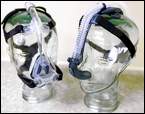
The machine is called a CPAP, which stands for continuous positive airway pressure. It's basically a mask that gently blows air into your mouth. (in most cases, it's the nose)
That usually fixes the problem, Rack said.
A dentist can provide a device that's placed in the mouth and keeps the airway open.
In more severe cases, surgery to open an obstructive airway is sometimes necessary.
But the CPAP fixed Kirk's problem, he said.
It was a little weird, at first, sleeping with a mask on, he said, but it changed his life so much he'd go to bed wearing a Darth Vader mask and hugging an oxygen tank if he had to.
Since undergoing the sleep study three weeks ago, he said, he's been sleeping all night, every night. He's dreaming again, something he hadn't done in a long time because he wasn't sleeping deeply enough.
He's no longer snoring, isn't tired at work, and has some of his old personality coming back, Linda said.
In short, he's learned to listen to his wife.
"I can't overemphasize enough the importance of listening to your spouse," he said. "They're the people who suffer when you're snoring. They're the people who monitor you and worry.
"Without her," he said, "I would never have come in."
Saturday, February 18, 2006
Sleeping Pill Wars
An editorial in the New York Times talks about the high use of sleeping pills in American society:
Americans are popping sleeping pills at a rapid rate, thanks to heavy marketing by the drug companies and a belief that a new generation of sleeping pills is safer than its predecessors. The upsurge is raising justifiable concerns that the pills will be overused by people who don't really need them or that doctors may reflexively prescribe pills while ignoring underlying conditions that may be responsible for sleeplessness.
As Stephanie Saul reported in The Times recently, some 42 million sleeping pill prescriptions were filled last year, up nearly 60 percent from 2000. More and more people are turning to a new generation of sleep aids called "Z" drugs. The best seller is currently Ambien, but over the past year it has been vigorously challenged by a newcomer, Lunesta, prompting a huge advertising and marketing battle.
Decades ago barbiturates were the drugs of choice for insomnia, but they are addictive and carry a high risk of death by overdose. In the 1970's they were largely displaced by benzodiazepines, drugs that include Dalmane and Halcion, which are less prone to overdose but have their own unpleasant side effects, including next-day drowsiness, dependence and withdrawal symptoms. The Z pills were developed to overcome such side effects.
But any implication that they are a huge breakthrough must be viewed skeptically. Roughly speaking, the recommended starting doses of two brand-name Z pills seem to cut only 15 minutes or so from the time needed to fall asleep after taking a placebo, while extending the duration of sleep by a half-hour or less. Most are classified as controlled substances because they can be abused and can cause dependence. Recent evaluations have reported finding no evidence that Z drugs are much different from their predecessors in terms of effectiveness and short-term adverse events.
Most experts believe that people should try a range of tricks, like minimizing the habits that interfere with sleep, before turning to pills. Some experts say psychotherapy, where available, has more lasting effects than sleeping pills. Insomniacs need to weigh whether sleeplessness is worse than the pills designed to ameliorate it.
I haven't heard the term "Z pill" used before. The Z pills include Lunesta, Ambien (and now Ambien CR), and Sonata. The Z pills bind to a subtype of the benzodiazepine receptor, and are more selective than the benzos such as valium and xanax. The Z pills have fewer side effects than the benzos: they are less addictive, and cause fewer memory problems.
The article mentions psychotherapy for insomnia. This is not commonly available. Here is a list of the less than 100 doctors and psychologists in the country who are certified in behavioral sleep medicine.
Americans are popping sleeping pills at a rapid rate, thanks to heavy marketing by the drug companies and a belief that a new generation of sleeping pills is safer than its predecessors. The upsurge is raising justifiable concerns that the pills will be overused by people who don't really need them or that doctors may reflexively prescribe pills while ignoring underlying conditions that may be responsible for sleeplessness.
As Stephanie Saul reported in The Times recently, some 42 million sleeping pill prescriptions were filled last year, up nearly 60 percent from 2000. More and more people are turning to a new generation of sleep aids called "Z" drugs. The best seller is currently Ambien, but over the past year it has been vigorously challenged by a newcomer, Lunesta, prompting a huge advertising and marketing battle.
Decades ago barbiturates were the drugs of choice for insomnia, but they are addictive and carry a high risk of death by overdose. In the 1970's they were largely displaced by benzodiazepines, drugs that include Dalmane and Halcion, which are less prone to overdose but have their own unpleasant side effects, including next-day drowsiness, dependence and withdrawal symptoms. The Z pills were developed to overcome such side effects.
But any implication that they are a huge breakthrough must be viewed skeptically. Roughly speaking, the recommended starting doses of two brand-name Z pills seem to cut only 15 minutes or so from the time needed to fall asleep after taking a placebo, while extending the duration of sleep by a half-hour or less. Most are classified as controlled substances because they can be abused and can cause dependence. Recent evaluations have reported finding no evidence that Z drugs are much different from their predecessors in terms of effectiveness and short-term adverse events.
Most experts believe that people should try a range of tricks, like minimizing the habits that interfere with sleep, before turning to pills. Some experts say psychotherapy, where available, has more lasting effects than sleeping pills. Insomniacs need to weigh whether sleeplessness is worse than the pills designed to ameliorate it.
I haven't heard the term "Z pill" used before. The Z pills include Lunesta, Ambien (and now Ambien CR), and Sonata. The Z pills bind to a subtype of the benzodiazepine receptor, and are more selective than the benzos such as valium and xanax. The Z pills have fewer side effects than the benzos: they are less addictive, and cause fewer memory problems.
The article mentions psychotherapy for insomnia. This is not commonly available. Here is a list of the less than 100 doctors and psychologists in the country who are certified in behavioral sleep medicine.
Friday, February 17, 2006
I'd love to do a sleep study on this guy
The Drudge Report links to this story about a Vietnamese man who hasn't slept since 1973:
You’d think going without sleep for that long may have its drawbacks, but not for the man in central Quang Nam province who has never been ill after decades of insomnia.
His inability to sleep has not only made him famous, but also represents a “miraculous” phenomenon worthy of scientific study.
Sixty-four-year-old Thai Ngoc, known as Hai Ngoc, said he could not sleep at night after getting a fever in 1973, and has counted infinite numbers of sheep during more than 11,700 consecutive sleepless nights.
“I don’t know whether the insomnia has impacted my health or not. But I’m still healthy and can farm normally like others,” Ngoc said.
Insomnia frequently occurs after brain injury (usually by trauma, but fever and infectious disease can also cause brain injury). However, I am not aware of any medically-documented cases of total insomnia. I do not believe this story, he must drift off into sleep at some point during the 24-hour day.
A recent movie dealt with this topic.
You’d think going without sleep for that long may have its drawbacks, but not for the man in central Quang Nam province who has never been ill after decades of insomnia.
His inability to sleep has not only made him famous, but also represents a “miraculous” phenomenon worthy of scientific study.
Sixty-four-year-old Thai Ngoc, known as Hai Ngoc, said he could not sleep at night after getting a fever in 1973, and has counted infinite numbers of sheep during more than 11,700 consecutive sleepless nights.
“I don’t know whether the insomnia has impacted my health or not. But I’m still healthy and can farm normally like others,” Ngoc said.
Insomnia frequently occurs after brain injury (usually by trauma, but fever and infectious disease can also cause brain injury). However, I am not aware of any medically-documented cases of total insomnia. I do not believe this story, he must drift off into sleep at some point during the 24-hour day.
A recent movie dealt with this topic.
Thursday, February 16, 2006
Sleep Education
The American Academy of Sleep Medicine now has a Sleep Education site aimed at patients with sleep disorders.
Saturday, February 11, 2006
Oral Appliances for Sleep Apnea
The National Sleep Foundation reports on the new American Academy of Sleep Medicine Practice Parameter for the use of oral appliances for the treatment of obstructive sleep apnea:
An oral appliance for sleep disordered breathing is a device that a dentist fits on the teeth or mouth to reduce snoring and to treat sleep apnea. Given how creative dentists are hundreds of such devices have been developed. Now the American Academy of Sleep Medicine (AASM) has updated its practice parameter recommendations for use of such devices. AASM’s experts find that the devices can be effective to treat snoring and mild to moderate sleep apnea, but they also caution that there is much more evidence – and better evidence – that continuous positive air pressure (CPAP) should be the first form of therapy for obstructive sleep apnea. They also caution that patients fitted with oral devices should be thoroughly evaluated before and after a device is fitted to determine whether it is not only reducing snoring and improving sleep as perceived by the patient, but also maintaining blood oxygen at the appropriate levels. But according to one practitioner of dental sleep medicine, it is very important to find a specialist who is familiar with the many available types of devices. He said that too many dentists fitting patients with oral appliances are familiar with only one type and this is an area where "one type does not fit all."
The major changes compared to the old 1995 practice parameters are:
1) a follow-up sleep study to ensure resolution of OSA is now recommended even for mild cases of OSA
and
2) the new parameters specify that dentists should be fitting these devices. There are some oral appliances out there that can be fitted by physicians without dental training. I was planning on using one of these in my sleep practice, but will now reconsider this.
An oral appliance for sleep disordered breathing is a device that a dentist fits on the teeth or mouth to reduce snoring and to treat sleep apnea. Given how creative dentists are hundreds of such devices have been developed. Now the American Academy of Sleep Medicine (AASM) has updated its practice parameter recommendations for use of such devices. AASM’s experts find that the devices can be effective to treat snoring and mild to moderate sleep apnea, but they also caution that there is much more evidence – and better evidence – that continuous positive air pressure (CPAP) should be the first form of therapy for obstructive sleep apnea. They also caution that patients fitted with oral devices should be thoroughly evaluated before and after a device is fitted to determine whether it is not only reducing snoring and improving sleep as perceived by the patient, but also maintaining blood oxygen at the appropriate levels. But according to one practitioner of dental sleep medicine, it is very important to find a specialist who is familiar with the many available types of devices. He said that too many dentists fitting patients with oral appliances are familiar with only one type and this is an area where "one type does not fit all."
The major changes compared to the old 1995 practice parameters are:
1) a follow-up sleep study to ensure resolution of OSA is now recommended even for mild cases of OSA
and
2) the new parameters specify that dentists should be fitting these devices. There are some oral appliances out there that can be fitted by physicians without dental training. I was planning on using one of these in my sleep practice, but will now reconsider this.
Monday, January 23, 2006
Thursday, January 19, 2006
Watching television in bed
Watching television in bed can contribute to insomnia. This study found another adverse effect of having a television in the bedroom:
A study by an Italian sexologist has found that couples who have a TV set in their bedroom have sex half as often as those who don't.
"If there's no television in the bedroom, the frequency (of sexual intercourse) doubles," said Serenella Salomoni whose team of psychologists questioned 523 Italian couples to see what effect television had on their sex lives.
A study by an Italian sexologist has found that couples who have a TV set in their bedroom have sex half as often as those who don't.
"If there's no television in the bedroom, the frequency (of sexual intercourse) doubles," said Serenella Salomoni whose team of psychologists questioned 523 Italian couples to see what effect television had on their sex lives.
Sunday, January 15, 2006
Word of the Day
WORD OF THE DAY
From Dictionary.com
somnolent (SOM-nuh-luhnt) adjective1. Sleepy; drowsy; inclined to sleep.2. Tending to cause sleepiness or drowsiness.[From Latin somnolentus, from somnus, "sleep." A related word is insomnia (in-, "not" + somnus).] Use: "Meanwhile, many a somnolent local authority has been stirred into action by Davidson's blunt approach."--John Lucas. "Memorials are made of these on the eve of Remembrance Sunday." Daily Telegraph: November 7, 1998.
From Dictionary.com
somnolent (SOM-nuh-luhnt) adjective1. Sleepy; drowsy; inclined to sleep.2. Tending to cause sleepiness or drowsiness.[From Latin somnolentus, from somnus, "sleep." A related word is insomnia (in-, "not" + somnus).] Use: "Meanwhile, many a somnolent local authority has been stirred into action by Davidson's blunt approach."--John Lucas. "Memorials are made of these on the eve of Remembrance Sunday." Daily Telegraph: November 7, 1998.
Wednesday, January 11, 2006
Update on Requirements for the New Sleep Board Examinations
The new ABMS examination [sleep medicine board examinations], starting in 2007, will be co-sponsored by the American Board of Internal Medicine, the American Board of Psychiatry and Neurology, and the American Board of Pediatrics with the addition of the American Board of Otolaryngology pending ABMS approval. There are three pathways that qualify physicians to sit for the new examination: (1) certification by one of the primary sponsoring boards and the current American Board of Sleep Medicine (ABSM); (2) certification by one of the primary sponsoring boards and completion of training in a 1-year sleep medicine fellowship program, not overlapping with any other residency or fellowship; and (3) clinical practice experience: this clinical practice experience pathway consists of a 5-year "grandfathering" period open to physicians who are board certified in one of the sponsoring specialty boards and who can attest that he or she has the equivalent of 1 year of clinical practice experience in sleep medicine during the prior 5 years.
Starting in 2007, to sit for the new sleep board exams and become board certfied in sleep medicine, a physician must first become board certified in psychiatry, internal medicine, neurology, pediatrics, or ENT. The current requirement of the American Board of Sleep Medicine is only that a physician be board certified in any speciality prior to taking their exam. No official word yet on whether or not the Family Practice Board is planning on becoming a sponsoring board for the new sleep exams.
Starting in 2007, to sit for the new sleep board exams and become board certfied in sleep medicine, a physician must first become board certified in psychiatry, internal medicine, neurology, pediatrics, or ENT. The current requirement of the American Board of Sleep Medicine is only that a physician be board certified in any speciality prior to taking their exam. No official word yet on whether or not the Family Practice Board is planning on becoming a sponsoring board for the new sleep exams.
Tuesday, January 10, 2006
Bedwetting and Obstructive Sleep Apnea
Nocturnal enuresis (bedwetting) affects approximately 5 million school-aged children. A child must be at least five-years old before this diagnosis can be made. A child with nocturnal enuresis should be examined by a physician to rule out an organic etiology, such as a urinary tract infection. Often no specific organic cause is found. However, pediatricians frequently neglect to ask their enuretic patients about symptoms of obstructive sleep apnea, a common cause of nocturnal enuresis.
Nocturnal enuresis is present in approximately 1/3 of children with obstructive sleep apnea. Besides enuresis, other symptoms of pediatric sleep apnea include snoring, sleepiness, hyperactivity, poor school performance, and behavior problems. In a recent study of children with both nocturnal enuresis and obstructive sleep apnea, Basha and colleagues found that treatment of obstructive sleep apnea by adenotonsillectomy often cured enuresis. In their study, postoperatively 61.4% of children were free of enuresis, 22.8% had a decrease in enuresis, and 15.8% had no change in enuresis.
How does obstructive sleep apnea (OSA) cause enuresis? Proposed factors include: 1) decreased arousal response, 2) impaired urodynamics, and 3) altered secretion of hormones that regulate fluid balance.
Decreased Arousal Response – OSA may promote enuresis by decreasing the arousal response from sleep.
Impaired Urodynamics – Increased intra-abdominal pressure during obstructive respiratory events increases bladder pressure.
Altered Secretion of Hormones – OSA can affect the secretion of atrial natriuretic peptide and antidiuretic hormone.
Nocturnal enuresis is a common childhood condition. Nocturnal enuresis is frequently due to OSA, and in these cases it usually resolves or improves with treatment of OSA.
References
1. Sheldon SH. “Sleep-Related Enuresis”. In Principals and Practice of Pediatric Sleep Medicine.
2. Basha S, et al. Effectiveness of Adenotonsillectomy in the Resolution of Nocturnal Enuresis Secondary to Obstructive Sleep Apnea. Laryngoscope, 115:1101-03, 2005.
3. Brooks LJ and Topol HI. Enuresis in Children with Sleep Apnea. J Pediatr 2003, 142:515-8.
Nocturnal enuresis is present in approximately 1/3 of children with obstructive sleep apnea. Besides enuresis, other symptoms of pediatric sleep apnea include snoring, sleepiness, hyperactivity, poor school performance, and behavior problems. In a recent study of children with both nocturnal enuresis and obstructive sleep apnea, Basha and colleagues found that treatment of obstructive sleep apnea by adenotonsillectomy often cured enuresis. In their study, postoperatively 61.4% of children were free of enuresis, 22.8% had a decrease in enuresis, and 15.8% had no change in enuresis.
How does obstructive sleep apnea (OSA) cause enuresis? Proposed factors include: 1) decreased arousal response, 2) impaired urodynamics, and 3) altered secretion of hormones that regulate fluid balance.
Decreased Arousal Response – OSA may promote enuresis by decreasing the arousal response from sleep.
Impaired Urodynamics – Increased intra-abdominal pressure during obstructive respiratory events increases bladder pressure.
Altered Secretion of Hormones – OSA can affect the secretion of atrial natriuretic peptide and antidiuretic hormone.
Nocturnal enuresis is a common childhood condition. Nocturnal enuresis is frequently due to OSA, and in these cases it usually resolves or improves with treatment of OSA.
References
1. Sheldon SH. “Sleep-Related Enuresis”. In Principals and Practice of Pediatric Sleep Medicine.
2. Basha S, et al. Effectiveness of Adenotonsillectomy in the Resolution of Nocturnal Enuresis Secondary to Obstructive Sleep Apnea. Laryngoscope, 115:1101-03, 2005.
3. Brooks LJ and Topol HI. Enuresis in Children with Sleep Apnea. J Pediatr 2003, 142:515-8.
Sunday, January 08, 2006
New Sleep Blog
Check out Sleep Disorders, one of the WebMD Blogs. It is written by Michael J Breus, PhD. He is a is a diplomate of the American Board of Sleep Medicine.
Friday, January 06, 2006
night eating syndrome (NES)
People with NES overeat in the evening and even awaken from sleep to eat one to two times a night on average, according to Kelly Allison, Ph.D. They consume one-quarter or more of their daily food intake after their evening meal, said Allison, a research assistant professor of psychology in psychiatry at the University of Pennsylvania School of Medicine and director of a NES-focused cognitive-behavioral therapy (CBT) study.
People with NES typically lack appetite in the morning. Some curb their daytime food intake, knowing they will graze after dark.
Not all people with NES are obese. Some maintain normal weight via daytime food restriction or intensive exercise. These individuals typically are younger by about a decade than obese people with NES, suggesting NES may serve as a pathway to obesity.
Many people with NES keep a small refrigerator next to the bed, favoring peanut butter, popsicles, candy bars, nuts, and sometimes fruit as handy middle-of-the-night snacks. They rely on food as an aid to returning to sleep, probably a conditioned response, Allison reported.
People with NES remember what they eat in the night, unlike people with sleep-related eating disorder (SRED), a rare parasomnia [similar to sleepwalking]. Those with SRED often have only partial recall of having consumed frequently unpalatable items, such as buttered cigarettes, raw bacon, or cat food.
"We think NES represents a dysregulation of circadian patterns of food intake, but without disruption of the circadian sleep pattern," he explained. "NES is primarily an eating disorder, and only secondarily a sleep disorder." While appetite normally shuts down in sleep, NES appears to be a rare clinical example of an uncoupling of eating and the sleep/wake cycle. Its cause has not been determined.
"While people with NES who stay on sertraline continue to do well," Allison notes, "learning CBT strategies may give them a better long term prognosis."
People with NES typically lack appetite in the morning. Some curb their daytime food intake, knowing they will graze after dark.
Not all people with NES are obese. Some maintain normal weight via daytime food restriction or intensive exercise. These individuals typically are younger by about a decade than obese people with NES, suggesting NES may serve as a pathway to obesity.
Many people with NES keep a small refrigerator next to the bed, favoring peanut butter, popsicles, candy bars, nuts, and sometimes fruit as handy middle-of-the-night snacks. They rely on food as an aid to returning to sleep, probably a conditioned response, Allison reported.
People with NES remember what they eat in the night, unlike people with sleep-related eating disorder (SRED), a rare parasomnia [similar to sleepwalking]. Those with SRED often have only partial recall of having consumed frequently unpalatable items, such as buttered cigarettes, raw bacon, or cat food.
"We think NES represents a dysregulation of circadian patterns of food intake, but without disruption of the circadian sleep pattern," he explained. "NES is primarily an eating disorder, and only secondarily a sleep disorder." While appetite normally shuts down in sleep, NES appears to be a rare clinical example of an uncoupling of eating and the sleep/wake cycle. Its cause has not been determined.
"While people with NES who stay on sertraline continue to do well," Allison notes, "learning CBT strategies may give them a better long term prognosis."
Tuesday, January 03, 2006
Study Finds Behavioral Therapy Benefits Older Adults with Insomnia
While insomnia in older adults is often treated with pharmacological therapies, a new study finds that behavioral therapies are effective and have the benefit that they continue to work over a long period of time. The review, conducted by lead author Michael Irwin, MD of UCLA and fellow researchers examined 23 randomized, controlled clinical research trials of more than 500 participants in total. The results showed that behavioral therapies including cognitive behavioral therapy (CBT), relaxation therapy and modifications in sleep behavior offered significant benefits to insomnia sufferers. The most common complaint among older adults with insomnia, frequent nighttime awakenings, was markedly improved by behavioral therapy.
The study comes on the heels of a 2005 National Institutes of Health state-of-the-science report which indicates that CBT is an effective treatment for chronic insomnia and may yield long-term benefits for patients. Yet both the NIH report and Irwin’s study call for more scientific investigation when it comes to insomnia treatments. In fact, Irwin’s review found that only eight studies on individuals over age 55 yielded statistically significant results. Irwin and fellow researchers call for more studies of older adults using objective measures to determine how insomnia can be treated best long-term.
The study is published in the January 2006 issue of Health Psychology and is the first in a series of evidence-based health reviews to be published by the journal.
From the National Sleep Foundation
The study comes on the heels of a 2005 National Institutes of Health state-of-the-science report which indicates that CBT is an effective treatment for chronic insomnia and may yield long-term benefits for patients. Yet both the NIH report and Irwin’s study call for more scientific investigation when it comes to insomnia treatments. In fact, Irwin’s review found that only eight studies on individuals over age 55 yielded statistically significant results. Irwin and fellow researchers call for more studies of older adults using objective measures to determine how insomnia can be treated best long-term.
The study is published in the January 2006 issue of Health Psychology and is the first in a series of evidence-based health reviews to be published by the journal.
From the National Sleep Foundation
The Relationship between Sleep and Metabolism
Karine Spiegel, PhD, and colleagues published an article in the December 7, 2004 issue of the Annuals of Internal Medicine that suggests that sleep restriction can lead to weight gain. They found that sleep restriction (4 hrs /night) leads to decreased levels of the hormone Leptin and increased levels of Ghrelin, another hormone. The alteration of the levels of these appetite and energy regulating hormones was associated with increased hunger and appetite in the study. This study adds to the evidence linking insufficient sleep to obesity. Other studies have linked sleep restriction to impaired glucose tolerance and diabetes mellitus.
It is important for physicians to counsel their overweight and obese patients to allow for at least 8 hours of sleep per night. Since obstructive sleep apnea is both a cause and consequence of obesity, practitioners should screen their obese patients for this common disorder. Useful symptoms to ask about include snoring and excessive daytime sleepiness.
It is important for physicians to counsel their overweight and obese patients to allow for at least 8 hours of sleep per night. Since obstructive sleep apnea is both a cause and consequence of obesity, practitioners should screen their obese patients for this common disorder. Useful symptoms to ask about include snoring and excessive daytime sleepiness.
Monday, December 26, 2005
Gaboxadol for Insomnia
A novel agent, Gaboxadol is being developed for insomnia:
Gaboxadol significantly improved sleep initiation and maintenance while also increasing time spent in restorative slow-wave sleep in an acute phase II placebo-controlled trial, Stephen Deacon, Ph.D., reported at the annual meeting of the Associated Professional Sleep Societies.
Based upon these and other encouraging findings, gaboxadol—first in a novel class of sleep medications known as selective extrasynaptic γ-aminobutyric acid-A agonists, or SEGAs—is now in larger definitive phase III clinical trials, added Dr. Deacon, head of clinical development for sleep disorders at H. Lundbeck, Ltd., Milton Keynes, England.
The benzodiazepine receptor agonists, a class of drugs widely prescribed for insomnia, also target γ-aminobutyric acid (GABA) receptors; however, their action is confined to synaptic GABA receptors. The extrasynaptic GABA-A receptors modulated by gaboxadol are richly present in parts of the brain thought to be important in sleep regulation, he explained.
We are learning more about the GABA-A receptor every day. It will be interesting to see how Gaboxadol compares with the synaptic GABA-A agonists in efficacy and tolerability.
Gaboxadol significantly improved sleep initiation and maintenance while also increasing time spent in restorative slow-wave sleep in an acute phase II placebo-controlled trial, Stephen Deacon, Ph.D., reported at the annual meeting of the Associated Professional Sleep Societies.
Based upon these and other encouraging findings, gaboxadol—first in a novel class of sleep medications known as selective extrasynaptic γ-aminobutyric acid-A agonists, or SEGAs—is now in larger definitive phase III clinical trials, added Dr. Deacon, head of clinical development for sleep disorders at H. Lundbeck, Ltd., Milton Keynes, England.
The benzodiazepine receptor agonists, a class of drugs widely prescribed for insomnia, also target γ-aminobutyric acid (GABA) receptors; however, their action is confined to synaptic GABA receptors. The extrasynaptic GABA-A receptors modulated by gaboxadol are richly present in parts of the brain thought to be important in sleep regulation, he explained.
We are learning more about the GABA-A receptor every day. It will be interesting to see how Gaboxadol compares with the synaptic GABA-A agonists in efficacy and tolerability.
Sunday, December 25, 2005
Preschool Children are not Getting Enough Sleep
A recent study conducted by researchers at Bradley Hospital and Brown Medical School using actigraphy and sleep diaries finds that children under five years of age may suffer from sleep debt as much as older children and adults. The study conducted in the homes of 165 Rhode Island boys and girls between ages 1 and 5 for seven nights of sleep showed that on average children slept 8.7 hours a night and less than 9.5 in a 24-hour period when naps were included. Yet few nap: according to parent diaries, 82 percent no longer nap some or all days after 18 months of age. The amount of sleep found among pre-schoolers in the study contrasts with the 12 to 15 hours pediatric sleep experts recommend for these age groups. The 2005 NSF/Pampers® Baby-Dry™ survey of 1,003 children under 4 years old produced similar findings; on average, the amount of sleep children got each night in the NSF poll was 9.7 hours.
Another element of the Bradley Hospital/Brown Medical School study showed that family characteristics including socio-economic status (SES) significantly contributed to children’s sleep/wake patterns. In families that had lower educational achievement and lower occupational ratings, children were more likely to be out of bed earlier in the morning and spend less time in bed at night; however, these children also had less nighttime awakenings and more sleep efficiency.
"We were very surprised to find how little preschool aged children actually sleep at night," said Acebo. This concerns the authors and sleep experts because studies of school-aged children with poor sleep show lower physical and academic performance and higher rates of parent-reported behavior problems."
Reported by the National Sleep Foundation
Another element of the Bradley Hospital/Brown Medical School study showed that family characteristics including socio-economic status (SES) significantly contributed to children’s sleep/wake patterns. In families that had lower educational achievement and lower occupational ratings, children were more likely to be out of bed earlier in the morning and spend less time in bed at night; however, these children also had less nighttime awakenings and more sleep efficiency.
"We were very surprised to find how little preschool aged children actually sleep at night," said Acebo. This concerns the authors and sleep experts because studies of school-aged children with poor sleep show lower physical and academic performance and higher rates of parent-reported behavior problems."
Reported by the National Sleep Foundation
Sunday, December 18, 2005
Why I ask patients about insurance status
An anonymous commenter on Kevin, MD wrote:
The first question out of the mouths of nearly all doctor's office staff is "What's your insurance?" I have lost track of how many doctors muse over what to do next and look at my chart murmuring, "What's your insurance?" Yes, they may be figuring out how to best work through the system of my particular insurer, but the net effect is thinking INSIDE the box. I have now taken to telling every doctor EVERY time I see them, "I don't care whether my plan pays for a particular course of action -- I want to know what YOU think is the best thing to do, regardless of cost, and then we'll decide what to do." I am looked at like I'm a Martian, because doctors don't think that way.
In sleep medicine, insurance status is crucial. Most sleep patients are going to need some type of sleep study to evaluate for sleep apnea. Insurance status is very important in properly carrying out and interpreting the sleep study. For example, if a person has Medicare, specific steps need to be taken in order to qualify the patient for the standard treatment of sleep apnea, CPAP. The sleep study pretty much has to be a full-night diagnostic study, rather than a split-night study. Like most insurance companies, Medicare requires an apnea-hypopnea index of at least 5 to qualify for CPAP. However, Medicare has a different definition of a hypopnea than other insurance companies. Medicare requires a 4% oxygen desaturation for hypopneas, most other agencies don't. Recently I had a young patient who I forgot to look up his insurance status before I wrote the orders of his sleep study. It turned out that he had Medicare due to a disability (there are a lot of non-elderly people with Medicare out there, you have to ask). The technician had to spend an additional 45 minutes rescoring the respiratory events to meet Medicare standards and I had to spend an additional 15 minutes reading the study again- Basically a wasted hour because I did not ask about insurance status.
Disclaimer: I have simplified Medicare requirements in the above discussion; it's actually more complicated, especially with the large number of dual-elgibles. This blog does not provide legal advice, you should consult an attorney if you plan on treating Medicare patients.
The first question out of the mouths of nearly all doctor's office staff is "What's your insurance?" I have lost track of how many doctors muse over what to do next and look at my chart murmuring, "What's your insurance?" Yes, they may be figuring out how to best work through the system of my particular insurer, but the net effect is thinking INSIDE the box. I have now taken to telling every doctor EVERY time I see them, "I don't care whether my plan pays for a particular course of action -- I want to know what YOU think is the best thing to do, regardless of cost, and then we'll decide what to do." I am looked at like I'm a Martian, because doctors don't think that way.
In sleep medicine, insurance status is crucial. Most sleep patients are going to need some type of sleep study to evaluate for sleep apnea. Insurance status is very important in properly carrying out and interpreting the sleep study. For example, if a person has Medicare, specific steps need to be taken in order to qualify the patient for the standard treatment of sleep apnea, CPAP. The sleep study pretty much has to be a full-night diagnostic study, rather than a split-night study. Like most insurance companies, Medicare requires an apnea-hypopnea index of at least 5 to qualify for CPAP. However, Medicare has a different definition of a hypopnea than other insurance companies. Medicare requires a 4% oxygen desaturation for hypopneas, most other agencies don't. Recently I had a young patient who I forgot to look up his insurance status before I wrote the orders of his sleep study. It turned out that he had Medicare due to a disability (there are a lot of non-elderly people with Medicare out there, you have to ask). The technician had to spend an additional 45 minutes rescoring the respiratory events to meet Medicare standards and I had to spend an additional 15 minutes reading the study again- Basically a wasted hour because I did not ask about insurance status.
Disclaimer: I have simplified Medicare requirements in the above discussion; it's actually more complicated, especially with the large number of dual-elgibles. This blog does not provide legal advice, you should consult an attorney if you plan on treating Medicare patients.
Wednesday, December 14, 2005
Sleep Boards Part 3
In response to my Dec 9 and 10 posts about the new sleep board examinations, a colleague of mine (and an old friend from residency days), Dr. Eric Clemons, writes (as always my comments will be in regular type, with quotes from Dr. Clemons in italics and color):
I had heard at one point Family Practice did not want to sponsor the ABIM exam as they are planning to offer their own certification to family practitioners. That would explain their reasoning. You are probably right about that.
-
I think it is unclear at this point what the new certification will mean. For academicians they will likely need this. For those in private practice I suspect the certification by the ABSM will be sufficient for most insurance companies for the foreseeable future and may make obtaining the new certification less of a necessity. I agree that in the short-term most insurance companies will continue to accept ABSM certification. However, I think that by the 2020's most insurance companies will stop accepting ABSM certification. (I plan to retire in the year 2039).
-
I was under the impression that all current diplomates of the ABSM who are MD's would be eligible to become certified through the practice pathway (and could sit for the first three exams). This would certainly help out your acquaintances and would keep anyone from losing their practices. My understanding was that the practice pathway was for those who did not complete an accredited sleep disorders fellowship. You still have to be board-certified in Internal Med, peds, psych, neuro, or ENT. The practice pathway just gives the candidate a flexible means of documenting sleep medicine experience. There is still a lot of confusion about the requirements for the new sleep boards, and I could be wrong.
-
Thanks for your comments, Eric
I had heard at one point Family Practice did not want to sponsor the ABIM exam as they are planning to offer their own certification to family practitioners. That would explain their reasoning. You are probably right about that.
-
I think it is unclear at this point what the new certification will mean. For academicians they will likely need this. For those in private practice I suspect the certification by the ABSM will be sufficient for most insurance companies for the foreseeable future and may make obtaining the new certification less of a necessity. I agree that in the short-term most insurance companies will continue to accept ABSM certification. However, I think that by the 2020's most insurance companies will stop accepting ABSM certification. (I plan to retire in the year 2039).
-
I was under the impression that all current diplomates of the ABSM who are MD's would be eligible to become certified through the practice pathway (and could sit for the first three exams). This would certainly help out your acquaintances and would keep anyone from losing their practices. My understanding was that the practice pathway was for those who did not complete an accredited sleep disorders fellowship. You still have to be board-certified in Internal Med, peds, psych, neuro, or ENT. The practice pathway just gives the candidate a flexible means of documenting sleep medicine experience. There is still a lot of confusion about the requirements for the new sleep boards, and I could be wrong.
-
Thanks for your comments, Eric
Sunday, December 11, 2005
New Long Term Data on Lunesta
The National Sleep Foundation reports:
A recent study conducted by Thomas Roth, PhD, a sleep researcher at the Henry Ford Hospital in Detroit, James K. Walsh, PhD, executive director and senior scientist at the Sleep Medicine and Research Center at St. Luke’s Hospital in St. Louis and fellow researchers investigated whether eszopiclone (Lunesta™) is effective for the long-term treatment of insomnia. Currently, the median duration of clinical trials evaluating the effectiveness of sleeping pills is one week. While a few studies have tested hypnotic agents for longer, Roth, Walsh and fellow researchers sought to find out how eszopiclone would treat insomnia over a year’s time. The first six months of the trial followed standard trial procedures – double-blind, placebo-controlled and randomized. The second six months the study was conducted "open-label," meaning the drug would be tested under conditions where both researchers and patients knew they were being treated with eszopiclone.
The study of 471 participants ages 21-64 found that eszopiclone was effective and well-tolerated for the length of the study. Researchers saw improvements in both six-month phases of the study, and they argue that the open-label phase was a valuable tool to assess the effectiveness of a medication in a real-life (or clinical) setting. Nevertheless, they note that they did not study what effects discontinuation of the medication would have upon these participants after the one-year trial. While the results of this study indicate that there is the potential for medication to treat chronic insomnia, more research on all areas of treatment for insomnia is necessary. Per the National Institute of Health’s state-of-the-science’s findings, "a substantial public and private research effort is warranted, including developing research tools and conducting longitudinal studies of randomized clinical trials."
I'll comment further on Lunesta when the actual study is published.
A recent study conducted by Thomas Roth, PhD, a sleep researcher at the Henry Ford Hospital in Detroit, James K. Walsh, PhD, executive director and senior scientist at the Sleep Medicine and Research Center at St. Luke’s Hospital in St. Louis and fellow researchers investigated whether eszopiclone (Lunesta™) is effective for the long-term treatment of insomnia. Currently, the median duration of clinical trials evaluating the effectiveness of sleeping pills is one week. While a few studies have tested hypnotic agents for longer, Roth, Walsh and fellow researchers sought to find out how eszopiclone would treat insomnia over a year’s time. The first six months of the trial followed standard trial procedures – double-blind, placebo-controlled and randomized. The second six months the study was conducted "open-label," meaning the drug would be tested under conditions where both researchers and patients knew they were being treated with eszopiclone.
The study of 471 participants ages 21-64 found that eszopiclone was effective and well-tolerated for the length of the study. Researchers saw improvements in both six-month phases of the study, and they argue that the open-label phase was a valuable tool to assess the effectiveness of a medication in a real-life (or clinical) setting. Nevertheless, they note that they did not study what effects discontinuation of the medication would have upon these participants after the one-year trial. While the results of this study indicate that there is the potential for medication to treat chronic insomnia, more research on all areas of treatment for insomnia is necessary. Per the National Institute of Health’s state-of-the-science’s findings, "a substantial public and private research effort is warranted, including developing research tools and conducting longitudinal studies of randomized clinical trials."
I'll comment further on Lunesta when the actual study is published.
Reader Question about Xyrem
A reader (Dozy) asks: Can you talk a bit to how Xyrem is supposed to work? My understanding is it's entirely out of your system in 12 hours after taking it, so how would it help with Cataplexy for the other 12 hours? Xyrem is the only FDA approved treatment for Cataplexy, and has been approved recently for EDS as well. It is the only proven non-stimulant EDS medicine that I'm aware of for the treatment of EDS. For those PWN who have anxiety issues (like me), a non-stimulant approach is vital to functioning. Do you know if other non-stimulant meds are on the horizon?
As far as non-stimulants on the horizon, in 2006 a new version of Provigil, called Nuvigil, that contains only 1 of the 2 isomers (mirror images) of the molecule should be coming out. I think that researchers are also working on treatments that involve hypocretin.
-
No one is exactly sure how xyrem has its therapeutic effect in narcolepsy. It probably improves sleepiness in narcolepsy by consolidating nocturnal sleep and increasing slow wave sleep. It acts on multiple neurochemical systems. According to Principles and Practice of Sleep Medicine "Most studies to date indicate that the sedative-hypnotic effect is mediated through GABA-B agonist activity". It is also thought to act on the poorly understoon GHB receptor.
I don't know why it has an effect on cataplexy even after it is out of the blood stream- I can only guess that there is still some left in the brain or that it is having some long-lasting effect in the brain. Sorry I can't fully answer your question about xyrem (also known as sodium oxybate and gamma-hydroxybutyric acid)
As far as non-stimulants on the horizon, in 2006 a new version of Provigil, called Nuvigil, that contains only 1 of the 2 isomers (mirror images) of the molecule should be coming out. I think that researchers are also working on treatments that involve hypocretin.
-
No one is exactly sure how xyrem has its therapeutic effect in narcolepsy. It probably improves sleepiness in narcolepsy by consolidating nocturnal sleep and increasing slow wave sleep. It acts on multiple neurochemical systems. According to Principles and Practice of Sleep Medicine "Most studies to date indicate that the sedative-hypnotic effect is mediated through GABA-B agonist activity". It is also thought to act on the poorly understoon GHB receptor.
I don't know why it has an effect on cataplexy even after it is out of the blood stream- I can only guess that there is still some left in the brain or that it is having some long-lasting effect in the brain. Sorry I can't fully answer your question about xyrem (also known as sodium oxybate and gamma-hydroxybutyric acid)
Saturday, December 10, 2005
Reader Question about the new Sleep Boards
In response to my post about the new Sleep Board examinations, a reader asks "I guess the question is this: do these changes appear to serve any real purpose, or is it just another turf battle?If so, are there really any sleep specialists who need to protect their turf? The ones I know all have ponderous waiting lists."
-
There is a turf battle going on, but it is not among sleep specialists in private practice. This battle is within academic medicine; The American Board of Medical Specialties and The Accreditation Council for Graduate Medical Education are trying to consolidate their control. The American Board Medical Specialties is trying to eliminate any medical board/examination not under its direct control (such as the American Board of Sleep Medicine, which is an independent board). The Accreditation Council for Graduate Medical Education wants complete control of all residency and fellowship training in the US.
-
As a sleep specialist in private practice, I am upset that I will have to take the new sleep boards in several years; I am proud to currently be a diplomate of the American Board of Sleep Medicine.
-
In my earlier post, I mentioned that family practitioners would be inelgible for the new sleep boards. My understanding is that this was by choice of their board, and is not due to conflict with any of the other member boards of the American Board of Medical Specialties.
-
The American Board of Sleep Medicine is not innocent in all of this; the leadership of the board cooperated in its own destruction.
-
This post is a departure from the usual professional tone I try to maintain on this blog (I try to save my rants for Rebel Doctor). Please feel free to disagree in the commment section; I may republish some of the disagreements in a regular post.
-
There is a turf battle going on, but it is not among sleep specialists in private practice. This battle is within academic medicine; The American Board of Medical Specialties and The Accreditation Council for Graduate Medical Education are trying to consolidate their control. The American Board Medical Specialties is trying to eliminate any medical board/examination not under its direct control (such as the American Board of Sleep Medicine, which is an independent board). The Accreditation Council for Graduate Medical Education wants complete control of all residency and fellowship training in the US.
-
As a sleep specialist in private practice, I am upset that I will have to take the new sleep boards in several years; I am proud to currently be a diplomate of the American Board of Sleep Medicine.
-
In my earlier post, I mentioned that family practitioners would be inelgible for the new sleep boards. My understanding is that this was by choice of their board, and is not due to conflict with any of the other member boards of the American Board of Medical Specialties.
-
The American Board of Sleep Medicine is not innocent in all of this; the leadership of the board cooperated in its own destruction.
-
This post is a departure from the usual professional tone I try to maintain on this blog (I try to save my rants for Rebel Doctor). Please feel free to disagree in the commment section; I may republish some of the disagreements in a regular post.
Friday, December 09, 2005
New Sleep Board Examinations
The American Board of Internal Medicine announces an Added Qualifications Examination in Sleep Medicine. This examination will take the place of the exam offered by the American Board of Sleep Medicine.
The American Board of Internal Medicine, along with the American Board of Psychiatry and Neurology, the American Board of Pediatrics, and the American Board of Otolaryngology, was recently authorized by the American Board of Medical Specialties to offer an Added Qualifications Examination in Sleep Medicine. Representatives from all four Boards will be developing and setting standards for the new examination. ABIM has administrative responsibility for examination development, and the participating/sponsoring boards have responsibility for setting admission criteria for their own diplomates. The examination will be open to diplomates in internal medicine, pediatrics, neurology, psychiatry, or otolaryngology.
The first examination will be administered in fall 2007. Admission requirements for ABIM candidates are being finalized, and confirmed information about the requirements will be available by the fall of 2006.
The Training Pathway for ABIM candidates will require 12 months of satisfactorily completed sleep medicine fellowship training. Sleep medicine fellowship training undertaken July 1, 2009, and thereafter must be accredited by the Accreditation Council for Graduate Medical Education (ACGME). Sleep medicine training undertaken prior to July 1, 2009, must be conducted within a program affiliated with an ACGME-accredited internal medicine or pulmonary disease fellowship program. A Practice Pathway will be available for the first three examinations in 2007, 2009, and 2011. ABIM candidates who have not had formal sleep medicine fellowship training will be eligible to apply through this pathway by documenting certification by the American Board of Sleep Medicine (ABSM) or by documenting the equivalent of 12 months of full-time post-training experience providing clinical care in sleep medicine accumulated over a maximum period of five years prior to application for examination.
Under the old system, most doctors became sleep specialists by completing a residency in any speciality and then completing a fellowship (usually 1 year) in sleep medicine and then taking the examination offered by the American Board of Sleep Medicine.
Those of us who are diplomates of the American Board of Sleep Medicine are now going to have to pay a lot of money (probably $1000 to $2000) to take the new exams. Sleep specialists who are not boarded in psychiatry, pediatrics, neurology, internal medicine or ENT will be left out in the cold. I know several sleep specialists who are boarded in family practice and sleep medicine who will not be able to take the new boards.
The American Board of Internal Medicine, along with the American Board of Psychiatry and Neurology, the American Board of Pediatrics, and the American Board of Otolaryngology, was recently authorized by the American Board of Medical Specialties to offer an Added Qualifications Examination in Sleep Medicine. Representatives from all four Boards will be developing and setting standards for the new examination. ABIM has administrative responsibility for examination development, and the participating/sponsoring boards have responsibility for setting admission criteria for their own diplomates. The examination will be open to diplomates in internal medicine, pediatrics, neurology, psychiatry, or otolaryngology.
The first examination will be administered in fall 2007. Admission requirements for ABIM candidates are being finalized, and confirmed information about the requirements will be available by the fall of 2006.
The Training Pathway for ABIM candidates will require 12 months of satisfactorily completed sleep medicine fellowship training. Sleep medicine fellowship training undertaken July 1, 2009, and thereafter must be accredited by the Accreditation Council for Graduate Medical Education (ACGME). Sleep medicine training undertaken prior to July 1, 2009, must be conducted within a program affiliated with an ACGME-accredited internal medicine or pulmonary disease fellowship program. A Practice Pathway will be available for the first three examinations in 2007, 2009, and 2011. ABIM candidates who have not had formal sleep medicine fellowship training will be eligible to apply through this pathway by documenting certification by the American Board of Sleep Medicine (ABSM) or by documenting the equivalent of 12 months of full-time post-training experience providing clinical care in sleep medicine accumulated over a maximum period of five years prior to application for examination.
Under the old system, most doctors became sleep specialists by completing a residency in any speciality and then completing a fellowship (usually 1 year) in sleep medicine and then taking the examination offered by the American Board of Sleep Medicine.
Those of us who are diplomates of the American Board of Sleep Medicine are now going to have to pay a lot of money (probably $1000 to $2000) to take the new exams. Sleep specialists who are not boarded in psychiatry, pediatrics, neurology, internal medicine or ENT will be left out in the cold. I know several sleep specialists who are boarded in family practice and sleep medicine who will not be able to take the new boards.
Wednesday, December 07, 2005
Rozerem (ramelteon) Update
A reader (shrinkette) asks "I'm hearing a lot from Rozerem reps these days. I now have a Rozerem pen, a Rozerem mug, and some Rozerem notepads. What is your opinion of Rozerem? Thank you
I have prescribed Rozerem several times, but so far only one of the patients has come back for follow-up. She is taking it for primary insomnia, and seems to be doing well on it. She thinks it is comparable in efficacy to Ambien, which she has taken in the past.
Rozerem acts on 2 of the melatonin receptors (MT1 and MT2) while sparing the peripheral melatonin receptor MT3. Melatonin, which hits all 3 receptors, has the theroetical possibility of interfering with puberty/reproductive functioning because of its effect on MT3. MT1 and MT2 are located mainly in the brain, at the suprachiasmatic nucleus.
Melatonin itself is useful for shifting the biogical clock if given at the proper time. However, it is not a good drug for pure insomnia- it has only about 25 % effectiveness for primary insomnia. Why is Rozerem, a melatonin agonist, effective for insomnia while melatonin isn't?? Nobody knows for sure, but it may be because of increased bioavailabilty or because of its ratio of action at the 2 main melatonin receptors.
From what I've heard, Rozerem is a little less effective for insomnia than the benzodiazepines and the benzo agonists (Ambien, Lunesta, Sonata). But it has a good side effect profile and no risk of addiction. Psychiatrists need to be aware that Luvox (fluvoxamine) raises its levels to 50-70x's normal, and therefore Rozerem and luvox should not be prescribed together.
For more about Rozerem, see this site.
There is a lot we don't know about this novel agent for insomnia. But I can tell you one thing for sure: the Rozerem drug reps are giving out great pens. They are long, wide, and easy to write with.
I have prescribed Rozerem several times, but so far only one of the patients has come back for follow-up. She is taking it for primary insomnia, and seems to be doing well on it. She thinks it is comparable in efficacy to Ambien, which she has taken in the past.
Rozerem acts on 2 of the melatonin receptors (MT1 and MT2) while sparing the peripheral melatonin receptor MT3. Melatonin, which hits all 3 receptors, has the theroetical possibility of interfering with puberty/reproductive functioning because of its effect on MT3. MT1 and MT2 are located mainly in the brain, at the suprachiasmatic nucleus.
Melatonin itself is useful for shifting the biogical clock if given at the proper time. However, it is not a good drug for pure insomnia- it has only about 25 % effectiveness for primary insomnia. Why is Rozerem, a melatonin agonist, effective for insomnia while melatonin isn't?? Nobody knows for sure, but it may be because of increased bioavailabilty or because of its ratio of action at the 2 main melatonin receptors.
From what I've heard, Rozerem is a little less effective for insomnia than the benzodiazepines and the benzo agonists (Ambien, Lunesta, Sonata). But it has a good side effect profile and no risk of addiction. Psychiatrists need to be aware that Luvox (fluvoxamine) raises its levels to 50-70x's normal, and therefore Rozerem and luvox should not be prescribed together.
For more about Rozerem, see this site.
There is a lot we don't know about this novel agent for insomnia. But I can tell you one thing for sure: the Rozerem drug reps are giving out great pens. They are long, wide, and easy to write with.
Tuesday, December 06, 2005
Business All-Nighters
The New York Times has an article about business travelers who burn the midnight oil while away on business trips:
"A business trip is not about sleep," said Mr. Stevens, who spends the wee hours in his hotel's lobby or bar, mapping his strategy for the next day. "Nobody comes out of any business meeting and says, 'You did best today because you look freshest.' Clients couldn't care less if I am fresh as a daisy. They just want to know that when I or my team comes to the table, we've got a big idea."
Sleep deprivation eventually catches up with you:
On the other hand, he recalls the time he drifted off while walking down a street - and collided with a parking meter. On another occasion, the lead negotiator on his team fell asleep in midsentence.
"A business trip is not about sleep," said Mr. Stevens, who spends the wee hours in his hotel's lobby or bar, mapping his strategy for the next day. "Nobody comes out of any business meeting and says, 'You did best today because you look freshest.' Clients couldn't care less if I am fresh as a daisy. They just want to know that when I or my team comes to the table, we've got a big idea."
Sleep deprivation eventually catches up with you:
On the other hand, he recalls the time he drifted off while walking down a street - and collided with a parking meter. On another occasion, the lead negotiator on his team fell asleep in midsentence.
Ambien
A reader (Dozy) asks, Does Ambien affect sleep architecture? If so, how?
answer:
Ambien is a benzodiazepine agonist that binds to the alpha 1 subtype of the GABA-A receptor. It is therefore more selective then the benzodiazepines such as valium, ativan, and xanax.
The benzos (valium, etc) tend to increase stage 2 sleep while decreasing deep sleep (stage 3 and 4 ) and decreasing REM sleep. These effects are mild.
Ambien has minimal effects on sleep architecture. In many studies, its effect on sleep stages is no different than placebo. In at least one study, it increased deep (slow wave) sleep.
_
The brief answer to your question is that, in short-term studies, Ambien decreases sleep latency (time to fall asleep) and increases total sleep time with no significant effect on sleep architecture.
answer:
Ambien is a benzodiazepine agonist that binds to the alpha 1 subtype of the GABA-A receptor. It is therefore more selective then the benzodiazepines such as valium, ativan, and xanax.
The benzos (valium, etc) tend to increase stage 2 sleep while decreasing deep sleep (stage 3 and 4 ) and decreasing REM sleep. These effects are mild.
Ambien has minimal effects on sleep architecture. In many studies, its effect on sleep stages is no different than placebo. In at least one study, it increased deep (slow wave) sleep.
_
The brief answer to your question is that, in short-term studies, Ambien decreases sleep latency (time to fall asleep) and increases total sleep time with no significant effect on sleep architecture.
Sunday, December 04, 2005
Reader Questions about Sleep Medicine
For the next 10 days, I am asking for reader questions. Please leave any questions about sleep medicine in the comment section. I will try to answer as many of them as possible. I do not guarantee that I will answer all questions. I may rephrase questions to make it clear that I am not practicing medicine when I answer questions. For example, if someone asks "I have an AHI of 95, what would be the best treatment for me?" I might change that to "what are the best treatments for severe sleep apnea?" in my post. I will leave the original question in the comments section unchanged.
CPAP Supplies
One of my patients recommended that I look at this site, because of the great pictures of CPAP machines and CPAP supplies. (this is not an endorsement of CPAP.com, and not a recommendation to buy CPAP supplies from them).
More about Cardiovascular Disease and Sleep Apnea
On November 20th, I blogged about 2 recent articles in the New England Journal of Medicine. USNews and World Report has a pretty good discussion of these same 2 articles:
People with sleep apnea often don't realize they have it, since they don't remember waking up again and again, gasping for breath. Often, it's a bed partner who hears the choking and "industrial-strength snoring," says Klar Yaggi, a sleep specialist at Yale who led the study. He and his colleagues followed two groups of patients who were tested for sleep apnea (defined as stopping breathing five or more times per hour). Some had the condition; some didn't. During the 3½ years or so that they were studied, the people with sleep apnea were about twice as likely to have a stroke or die.
Another study in the same issue of the New England Journal looked at how well the continuous air treatment works for people with central sleep apnea, a different disorder altogether. In both forms of sleep apnea, you stop breathing periodically. But in central sleep apnea, the problem is not an obstructed airway but that the brain fails to send out the command to breathe. The disorder is usually caused by congestive heart failure, in which the heart doesn't pump as well as it should and fluid collects in the chest.
The treatment did help people with central sleep apnea in some ways: Their hearts worked better, they didn't stop breathing as often, they didn't have adrenaline surges, and they were able to exercise more.
"That's the good news," says Douglas Bradley, a pulmonologist at the University of Toronto and author of the article. "The bad news is that we didn't improve survival."
People with sleep apnea often don't realize they have it, since they don't remember waking up again and again, gasping for breath. Often, it's a bed partner who hears the choking and "industrial-strength snoring," says Klar Yaggi, a sleep specialist at Yale who led the study. He and his colleagues followed two groups of patients who were tested for sleep apnea (defined as stopping breathing five or more times per hour). Some had the condition; some didn't. During the 3½ years or so that they were studied, the people with sleep apnea were about twice as likely to have a stroke or die.
Another study in the same issue of the New England Journal looked at how well the continuous air treatment works for people with central sleep apnea, a different disorder altogether. In both forms of sleep apnea, you stop breathing periodically. But in central sleep apnea, the problem is not an obstructed airway but that the brain fails to send out the command to breathe. The disorder is usually caused by congestive heart failure, in which the heart doesn't pump as well as it should and fluid collects in the chest.
The treatment did help people with central sleep apnea in some ways: Their hearts worked better, they didn't stop breathing as often, they didn't have adrenaline surges, and they were able to exercise more.
"That's the good news," says Douglas Bradley, a pulmonologist at the University of Toronto and author of the article. "The bad news is that we didn't improve survival."
Polysomnography
Another creation for the Somnus Sleep Clinic Website:
Polysomnography
A polysomnogram (also know as a PSG) is an overnight sleep study. A PSG is useful in the diagnosis of several sleep disorders, especially obstructive sleep apnea.
Before the test begins, our technicians spend about 45 minutes applying the painless electrodes, sensors, and monitors to the patient.
EEG Electrodes on the scalp are used to monitor brainwaves. Electrodes are also applied to the chin to measure muscle tone and next to the eyes to monitor eye movements. These 3 sets of electrodes are used to determine stage and depth of sleep.
Electrodes are attached to the lower legs to monitor for the leg movements that characterize the disease Periodic Limb Movement Disorder.
To monitor breathing, airflow monitors are placed at the mouth and nose. The monitor at the nose is similar to an oxygen cannula. Belts are placed across the chest and abdomen to detect respiratory effort. These belts are useful in distinguishing between the 2 types of sleep apnea. An oximeter is placed on one finger to detect decreases in oxygen, which are common in obstructive sleep apnea.
Several electrodes are applied to the chest to monitor heart rate and rhythm.
Many patients ask if is possible to get up in the middle of the night during a PSG. It takes a technician only about a minute to help the patient wrap the wires around his neck and get out of bed. Then the patient can easily walk around
A PSG lasts about 8 hours. After the procedure is finished, it takes about 10 minutes to remove the electrodes and sensors. A shower with plenty of shampoo is necessary to remove the electrode gel from the hair!
Polysomnography
A polysomnogram (also know as a PSG) is an overnight sleep study. A PSG is useful in the diagnosis of several sleep disorders, especially obstructive sleep apnea.
Before the test begins, our technicians spend about 45 minutes applying the painless electrodes, sensors, and monitors to the patient.
EEG Electrodes on the scalp are used to monitor brainwaves. Electrodes are also applied to the chin to measure muscle tone and next to the eyes to monitor eye movements. These 3 sets of electrodes are used to determine stage and depth of sleep.
Electrodes are attached to the lower legs to monitor for the leg movements that characterize the disease Periodic Limb Movement Disorder.
To monitor breathing, airflow monitors are placed at the mouth and nose. The monitor at the nose is similar to an oxygen cannula. Belts are placed across the chest and abdomen to detect respiratory effort. These belts are useful in distinguishing between the 2 types of sleep apnea. An oximeter is placed on one finger to detect decreases in oxygen, which are common in obstructive sleep apnea.
Several electrodes are applied to the chest to monitor heart rate and rhythm.
Many patients ask if is possible to get up in the middle of the night during a PSG. It takes a technician only about a minute to help the patient wrap the wires around his neck and get out of bed. Then the patient can easily walk around
A PSG lasts about 8 hours. After the procedure is finished, it takes about 10 minutes to remove the electrodes and sensors. A shower with plenty of shampoo is necessary to remove the electrode gel from the hair!
Friday, December 02, 2005
The Basics of Narcolepsy
Here is something I have been working on for the Somnus Sleep Clinic website (which is why I wrote it in the 3rd person):
Narcolepsy
What is Narcolepsy?
Narcolepsy is a sleep disorder resulting in excessive daytime sleepiness. It is often associated with cataplexy. Cataplexy is characterized by sudden emotionally-induced loss of bilateral muscle tone. In many narcoleptics, laughter can provoke an episode of cataplexy. An episode of cataplexy lasts several seconds to several minutes, and often affects the knees, face, or neck.
How is Narcolepsy Diagnosed?
After a history and physical by a sleep physician, further sleep testing is usually required to make a diagnosis of narcolepsy. The key test in the diagnosis of narcolepsy is the multiple sleep latency test (MSLT). This test involves a series of 4-5 nap opportunities during the day. By measuring brain wave activity (EEG), this test measures how long it takes a person to fall asleep, and if a person enters REM sleep (dream sleep) during a nap. During the MSLT, narcoleptics will typically fall asleep within 5 to 8 minutes and enter into REM sleep during at least 2 of the naps. The MSLT can be a difficult test to properly administer and interpret; significant experience on the part of the sleep physician and technical staff is necessary. For more technical information about the proper administration of the MSLT, please see Dr. Rack’s recent comments in The American Journal of Psychiatry (http://ajp.psychiatryonline.org/cgi/content/full/162/11/2198-a).
What Causes Narcolepsy?
Recent research suggests that narcolepsy is an autoimmune disorder. More specifically, narcolepsy is thought to be caused by autoimmune destruction of hypocretin neurons in the hypothalamus (the hypothalamus is an area at the base of the brain important in the regulation of sleep and wakefulness).
How is Narcolepsy Treated?
Sleepiness is usually treated with stimulants (such as Ritalin) or Provigil. Many antidepressants help with cataplexy. Xyrem is helpful for both sleepiness and cataplexy. Behavioral methods, especially brief naps, are also useful in the treatment of narcolepsy.
Where can I find out more information?
Dr. Rack has written extensively about narcolepsy and its treatment in his blog, sleepdoctor (http://sleepdoctor.blogspot.com/). Much of this information is located at http://sleepdoctor.blogspot.com/2005/05/narcolepsy-3.html.
Narcolepsy
What is Narcolepsy?
Narcolepsy is a sleep disorder resulting in excessive daytime sleepiness. It is often associated with cataplexy. Cataplexy is characterized by sudden emotionally-induced loss of bilateral muscle tone. In many narcoleptics, laughter can provoke an episode of cataplexy. An episode of cataplexy lasts several seconds to several minutes, and often affects the knees, face, or neck.
How is Narcolepsy Diagnosed?
After a history and physical by a sleep physician, further sleep testing is usually required to make a diagnosis of narcolepsy. The key test in the diagnosis of narcolepsy is the multiple sleep latency test (MSLT). This test involves a series of 4-5 nap opportunities during the day. By measuring brain wave activity (EEG), this test measures how long it takes a person to fall asleep, and if a person enters REM sleep (dream sleep) during a nap. During the MSLT, narcoleptics will typically fall asleep within 5 to 8 minutes and enter into REM sleep during at least 2 of the naps. The MSLT can be a difficult test to properly administer and interpret; significant experience on the part of the sleep physician and technical staff is necessary. For more technical information about the proper administration of the MSLT, please see Dr. Rack’s recent comments in The American Journal of Psychiatry (http://ajp.psychiatryonline.org/cgi/content/full/162/11/2198-a).
What Causes Narcolepsy?
Recent research suggests that narcolepsy is an autoimmune disorder. More specifically, narcolepsy is thought to be caused by autoimmune destruction of hypocretin neurons in the hypothalamus (the hypothalamus is an area at the base of the brain important in the regulation of sleep and wakefulness).
How is Narcolepsy Treated?
Sleepiness is usually treated with stimulants (such as Ritalin) or Provigil. Many antidepressants help with cataplexy. Xyrem is helpful for both sleepiness and cataplexy. Behavioral methods, especially brief naps, are also useful in the treatment of narcolepsy.
Where can I find out more information?
Dr. Rack has written extensively about narcolepsy and its treatment in his blog, sleepdoctor (http://sleepdoctor.blogspot.com/). Much of this information is located at http://sleepdoctor.blogspot.com/2005/05/narcolepsy-3.html.
Wednesday, November 30, 2005
New Indication for Xyrem
The National Sleep Foundation reports:
The Food and Drug Administration’s (FDA) latest drug approval may provide significant symptom relief for narcolepsy patients. Researchers found that Xyrem® (sodium oxybate), a medication approved for treatment of cataplexy (the loss of muscle tone in narcolepsy patients) in 2002, abated symptoms of excessive daytime sleepiness in 4- and 8-week clinical trials. Participants reported a significant improvement in quality of life and the medication was generally well-tolerated. Researchers tested three doses of the drug – 4.5g, 6g, or 9g in divided doses (one at bedtime and the other 2.5 to 4 hours later) in the randomized, double-blind, placebo-controlled trial and found improvement in narcolepsy patients’ reports of excessive sleepiness for the individuals taking the 6g and 9g doses.
Narcolepsy is a neurological disorder caused by the brain’s inability to regulate sleep-wake cycles normally, and its prevalence in the developed world is approximately the same as Parkinson’s disease and multiple sclerosis. Researchers are hopeful that sodium oxybate will provide relief for the disabling effects of excessive daytime sleepiness in narcolepsy patients.
-
Xyrem has been approved for several years for cataplexy. I have tried to prescribe it several times, but patients find it too inconvenient and don't want to try it. It has to be ordered from a central pharmacy (Another name for Xyrem is gamma-hydroxybutyrate, the "date rape" drug). Also, the patient has to awaken in the middle of the night to take the 2nd dose. From the data I've seen, it is no more effective than the tricyclic antidepressants for cataplexy. And it has the nasty side effect of enuresis (bedwetting).
Its effect on sleepiness is mild- less than the stimulants and provigil. It is thought to decrease sleepiness by improving nocturnal sleep. It consolidates sleep and increases slow wave sleep.
Xyrem may be worth a try in narcoleptics who are having trouble tolerating the traditional medications (stimulants, provigil, antidepressants) used for the symptoms of narcolepsy.
The Food and Drug Administration’s (FDA) latest drug approval may provide significant symptom relief for narcolepsy patients. Researchers found that Xyrem® (sodium oxybate), a medication approved for treatment of cataplexy (the loss of muscle tone in narcolepsy patients) in 2002, abated symptoms of excessive daytime sleepiness in 4- and 8-week clinical trials. Participants reported a significant improvement in quality of life and the medication was generally well-tolerated. Researchers tested three doses of the drug – 4.5g, 6g, or 9g in divided doses (one at bedtime and the other 2.5 to 4 hours later) in the randomized, double-blind, placebo-controlled trial and found improvement in narcolepsy patients’ reports of excessive sleepiness for the individuals taking the 6g and 9g doses.
Narcolepsy is a neurological disorder caused by the brain’s inability to regulate sleep-wake cycles normally, and its prevalence in the developed world is approximately the same as Parkinson’s disease and multiple sclerosis. Researchers are hopeful that sodium oxybate will provide relief for the disabling effects of excessive daytime sleepiness in narcolepsy patients.
-
Xyrem has been approved for several years for cataplexy. I have tried to prescribe it several times, but patients find it too inconvenient and don't want to try it. It has to be ordered from a central pharmacy (Another name for Xyrem is gamma-hydroxybutyrate, the "date rape" drug). Also, the patient has to awaken in the middle of the night to take the 2nd dose. From the data I've seen, it is no more effective than the tricyclic antidepressants for cataplexy. And it has the nasty side effect of enuresis (bedwetting).
Its effect on sleepiness is mild- less than the stimulants and provigil. It is thought to decrease sleepiness by improving nocturnal sleep. It consolidates sleep and increases slow wave sleep.
Xyrem may be worth a try in narcoleptics who are having trouble tolerating the traditional medications (stimulants, provigil, antidepressants) used for the symptoms of narcolepsy.
Friday, November 25, 2005
New Sleep Billing Codes
Does anyone have any experience with the new ICD-9 billing codes for sleep, especially the codes for obstructive sleep apnea (OSA)??
-
780.53-0 used to be the code for OSA. Now there are 2 main codes for OSA:
780.53 (hypersomnia with sleep apnea, unspecified) and 327.23 (obstructive sleep apnea).
What I have been doing is using 780.53 for suspected cases of OSA, and 327.23 for confirmed cases. For upper airway resistance syndrome, I usually code 780.53. Does anyone know if this is correct?? Does anyone have any references?? I bought my copy of The International Classification of Sleep Disorders-2nd edition this summer, before the new ICD-9 codes were available. Have ICD-9 codes been added to the International Classification of Sleep Disorders yet?
-
780.53-0 used to be the code for OSA. Now there are 2 main codes for OSA:
780.53 (hypersomnia with sleep apnea, unspecified) and 327.23 (obstructive sleep apnea).
What I have been doing is using 780.53 for suspected cases of OSA, and 327.23 for confirmed cases. For upper airway resistance syndrome, I usually code 780.53. Does anyone know if this is correct?? Does anyone have any references?? I bought my copy of The International Classification of Sleep Disorders-2nd edition this summer, before the new ICD-9 codes were available. Have ICD-9 codes been added to the International Classification of Sleep Disorders yet?
Sunday, November 20, 2005
Cardiovascular Disease and Sleep Apnea
The Nov 10 issue of the New England Journal of Medicine had several interesting articles about sleep apnea.
Obstructive sleep apnea (OSA) is a risk factor for the development of hypertension. Increasing evidence also links OSA to ischemic heart disease and stroke. Yaggi HK and colleagues (N Engl J Med 2005;353:2034-41), in an observational cohort study, found that OSA significantly increases the risk of stroke or death from any cause. This increase in risk is independent of other risk factors, including hypertension.
Both obstructive and central sleep apnea are common in patients with CHF; central sleep apnea is present in up to 40% of patients with chronic heart failure. Bradley TD et al. (N Engl J Med 2005;353:2025-33) randomly assigned 258 patients with CHF and central sleep apnea to receive either CPAP or no CPAP. CPAP decreased apnea, increased the injection fraction, and improved nocturnal oxygenation, but did not increase survival.
Nasal CPAP is the standard treatment for OSA; other treatment modalities include oral appliances and ENT surgery. The first step in the management of central sleep apnea associated with heart failure is optimization of cardiac functioning. Other possible treatments include CPAP, BiPAP, supplemental oxygen, and theophylline.
Obstructive sleep apnea (OSA) is a risk factor for the development of hypertension. Increasing evidence also links OSA to ischemic heart disease and stroke. Yaggi HK and colleagues (N Engl J Med 2005;353:2034-41), in an observational cohort study, found that OSA significantly increases the risk of stroke or death from any cause. This increase in risk is independent of other risk factors, including hypertension.
Both obstructive and central sleep apnea are common in patients with CHF; central sleep apnea is present in up to 40% of patients with chronic heart failure. Bradley TD et al. (N Engl J Med 2005;353:2025-33) randomly assigned 258 patients with CHF and central sleep apnea to receive either CPAP or no CPAP. CPAP decreased apnea, increased the injection fraction, and improved nocturnal oxygenation, but did not increase survival.
Nasal CPAP is the standard treatment for OSA; other treatment modalities include oral appliances and ENT surgery. The first step in the management of central sleep apnea associated with heart failure is optimization of cardiac functioning. Other possible treatments include CPAP, BiPAP, supplemental oxygen, and theophylline.
Tuesday, November 15, 2005
Adolescent Insomnia
The New York Times reports that the use of medication to treat insomnia in adolescents is increasing:
In 2004, more than 180,000 people under age 20 in the United States - most of them 10 or older took sleep medications, according to estimates released last month by Medco Health Solutions, a large managed-care company.
Although that represents only about one child in 500, Medco found that usage was up by 85 percent since 2000.
The numbers reported by Medco were somewhat mysterious: the company's report did not indicate why the pills were prescribed for the patients under 18, or which pills were prescribed for them.
That makes some doctors worry that the large increase may reflect a certain amount of unnecessary prescribing.
It's a fairly good article, but I disagree with one of the statements made by a sleep specialist in the article:
"The last thing we want to suggest is that it's O.K. to throw a medication at something without understanding the problem," said Dr. Judith Owens, the director of the Pediatric Sleep Disorders Clinic at Hasbro Children's Hospital, in Providence, R.I. "Insomnia is a symptom, not a disorder. It's like pain. You're not going to give a patient pain medication without figuring out what's causing the pain."
At least in adults, considering insomnia to be just a symptom is outdated. To quote from the new book Cognitive Behavioral Treatment of Insomnia (Perlis ML et al, 2005), "In the early 1980's...there was perhaps no rallying cry as popular as 'insomnia is a symptom, not a disorder'....After more than two decades of sleep research...Insomnia is once again considered a distinct nosological entity." The "NIH State of the Science Conference Statement on Manifestations and Management of Chronic Insomnia in Adults Statement" moves away from the concept of 'secondary insomnia'. It uses the term 'comorbid insomnia'. For example, in the case of depression associated with insomnia, it is often impossible to tell if depression is causing the insomnia, or if insomnia is causing the depression. According to the conference statement, "the limited understanding of mechanistic pathways in chronic insomnia precludes drawing firm conclusions about the nature of these associations or direction of causality."
In 2004, more than 180,000 people under age 20 in the United States - most of them 10 or older took sleep medications, according to estimates released last month by Medco Health Solutions, a large managed-care company.
Although that represents only about one child in 500, Medco found that usage was up by 85 percent since 2000.
The numbers reported by Medco were somewhat mysterious: the company's report did not indicate why the pills were prescribed for the patients under 18, or which pills were prescribed for them.
That makes some doctors worry that the large increase may reflect a certain amount of unnecessary prescribing.
It's a fairly good article, but I disagree with one of the statements made by a sleep specialist in the article:
"The last thing we want to suggest is that it's O.K. to throw a medication at something without understanding the problem," said Dr. Judith Owens, the director of the Pediatric Sleep Disorders Clinic at Hasbro Children's Hospital, in Providence, R.I. "Insomnia is a symptom, not a disorder. It's like pain. You're not going to give a patient pain medication without figuring out what's causing the pain."
At least in adults, considering insomnia to be just a symptom is outdated. To quote from the new book Cognitive Behavioral Treatment of Insomnia (Perlis ML et al, 2005), "In the early 1980's...there was perhaps no rallying cry as popular as 'insomnia is a symptom, not a disorder'....After more than two decades of sleep research...Insomnia is once again considered a distinct nosological entity." The "NIH State of the Science Conference Statement on Manifestations and Management of Chronic Insomnia in Adults Statement" moves away from the concept of 'secondary insomnia'. It uses the term 'comorbid insomnia'. For example, in the case of depression associated with insomnia, it is often impossible to tell if depression is causing the insomnia, or if insomnia is causing the depression. According to the conference statement, "the limited understanding of mechanistic pathways in chronic insomnia precludes drawing firm conclusions about the nature of these associations or direction of causality."
Saturday, November 12, 2005
Sleep in Animals
The NY Times has a nice article about how scientists are studying sleep in animals in order to better understand the mysteries of human sleep:
It has been almost 600 million years since human ancestors diverged from those of flies. As those ancestors evolved, their sleep evolved as well. Human sleep, for example, features not only slow-wave sleep, but bouts of sleep when the eyes make rapid movements and when we dream. Rapid eye movement, or REM sleep, as it is known, generally comes later in the night, after periods of intense slow-wave sleep.
Other mammals also experience a mix of REM and non-REM sleep, as do birds. Sleep researchers would like to know whether this pattern existed in the common ancestors of birds and mammals, reptilian animals that lived 310 million years ago. It is also possible that birds and mammals independently evolved this sleep pattern, just as birds and bats independently evolved wings.
Answering that question may help scientists understand why REM sleep exists. Scientists have long debated its function, suggesting that it may play important roles in memory or learning. In the Oct. 27 issue of Nature, Jerome Siegel, a sleep expert at the University of California, Los Angeles, argues that REM does not play a vital physiological role like slow-wave sleep. He points out that brain injuries and even medications like antidepressants can drastically reduce REM without any apparent ill effect.
"People who don't have REM sleep are remarkably normal," Dr. Siegel said. "There's no evidence for any intellectual or emotional problems."
So why do mammals and birds have REM sleep at all? "The best answer I can come up with is that it's there to prepare you for waking," Dr. Siegel said. "When the important work of sleep is done, REM sleep just makes you as alert as you can be while you're asleep."
-
Circadiana blogged about this topic on Nov 1st.
It has been almost 600 million years since human ancestors diverged from those of flies. As those ancestors evolved, their sleep evolved as well. Human sleep, for example, features not only slow-wave sleep, but bouts of sleep when the eyes make rapid movements and when we dream. Rapid eye movement, or REM sleep, as it is known, generally comes later in the night, after periods of intense slow-wave sleep.
Other mammals also experience a mix of REM and non-REM sleep, as do birds. Sleep researchers would like to know whether this pattern existed in the common ancestors of birds and mammals, reptilian animals that lived 310 million years ago. It is also possible that birds and mammals independently evolved this sleep pattern, just as birds and bats independently evolved wings.
Answering that question may help scientists understand why REM sleep exists. Scientists have long debated its function, suggesting that it may play important roles in memory or learning. In the Oct. 27 issue of Nature, Jerome Siegel, a sleep expert at the University of California, Los Angeles, argues that REM does not play a vital physiological role like slow-wave sleep. He points out that brain injuries and even medications like antidepressants can drastically reduce REM without any apparent ill effect.
"People who don't have REM sleep are remarkably normal," Dr. Siegel said. "There's no evidence for any intellectual or emotional problems."
So why do mammals and birds have REM sleep at all? "The best answer I can come up with is that it's there to prepare you for waking," Dr. Siegel said. "When the important work of sleep is done, REM sleep just makes you as alert as you can be while you're asleep."
-
Circadiana blogged about this topic on Nov 1st.
Tuesday, October 25, 2005
Brief Update
I have left the University of Mississippi Medical Center. Somnus Sleep Clinic will be opening in several weeks.
Tuesday, August 30, 2005
Restless Leg Syndrome
Below is a collumn about restless leg syndrome that I wrote for the newsletter of the Mississippi Psychiatric Association newsletter:
It’s summer and time for vacation! Although the time spent at the vacation destination is usually pleasant, long car and airplane trips can be tedious. For those with restless leg syndrome, these trips can be pure misery.
Restless leg syndrome (RLS) is characterized by an urge to move the legs, usually accompanied by disagreeable/uncomfortable leg sensations. These sensations, often described as "creeping" or "crawling," are typically perceived in the calves, but can also involve other parts of the lower extremities, and in more severe cases, can involve the upper extremities. RLS is worse in the evening/night and in sedentary situations such as long car rides. The symptoms often interfere with sleep. Vigorous movement improves RLS symptoms. Response to a dopaminergic drug is considered to be supportive of the diagnosis.
Approximately 10% of the population has at least mild, intermittent symptoms of RLS; about 3% of the population has moderate to severe symptoms.
RLS can be idiopathic, familial (often inherited in an autosomal dominant pattern), or secondary. Common secondary causes of RLS include iron deficiency, pregnancy, uremia, and neuropathy. RLS has also been reported to occur in association with folate, B12, and magnesium deficiencies. Many psychiatric medications, including dopamine antagonists, serotonergic antidepressants, and lithium, can unmask or worsen RLS. Wellbutrin, however, does not worsen RLS. Wellbutrin, due to its dopaminergic properties, has been speculated to improve RLS, but data is lacking.
RLS is diagnosed based on history; polysomnography is not necessary or indicated for diagnosis, though in most cases periodic leg movements occur during sleep. The differential diagnosis includes nocturnal leg cramps, neuropathy, akathisia, and vascular disease. The most important lab test to check in someone with restless leg syndrome is a ferritin level. Iron supplementation should be administered to keep the ferritin level above 50.
RLS is commonly treated with dopaminergic agents. Requip (ropinirole) is the first and only FDA-approved medication for the treatment of moderate-to-severe primary RLS. Mirapex (pramipexole) is also commonly used. Ergot-derived medications, such as pergolide, should be avoided due to the risk of cardiac valvuopathy. Sinemet can be used for short-term treatment or to confirm the diagnosis, but has a higher risk of augmentation than the other dopaminergic medications. Augmentation is the shifting of symptoms to several hours earlier than was typical before pharmacologic intervention. Other medications used to treat RLS include benzodiazepines, opioids, and gabapentin.
RLS is a common, unpleasant condition that can be unmasked or worsened by many psychiatric medications. Its prevalence in the psychiatric population is probably higher than in the general population. In cases in which the diagnosis is uncertain or in which the psychiatrist feels uncomfortable treating RLS, referral to a sleep specialist or a neurologist is indicated.
It’s summer and time for vacation! Although the time spent at the vacation destination is usually pleasant, long car and airplane trips can be tedious. For those with restless leg syndrome, these trips can be pure misery.
Restless leg syndrome (RLS) is characterized by an urge to move the legs, usually accompanied by disagreeable/uncomfortable leg sensations. These sensations, often described as "creeping" or "crawling," are typically perceived in the calves, but can also involve other parts of the lower extremities, and in more severe cases, can involve the upper extremities. RLS is worse in the evening/night and in sedentary situations such as long car rides. The symptoms often interfere with sleep. Vigorous movement improves RLS symptoms. Response to a dopaminergic drug is considered to be supportive of the diagnosis.
Approximately 10% of the population has at least mild, intermittent symptoms of RLS; about 3% of the population has moderate to severe symptoms.
RLS can be idiopathic, familial (often inherited in an autosomal dominant pattern), or secondary. Common secondary causes of RLS include iron deficiency, pregnancy, uremia, and neuropathy. RLS has also been reported to occur in association with folate, B12, and magnesium deficiencies. Many psychiatric medications, including dopamine antagonists, serotonergic antidepressants, and lithium, can unmask or worsen RLS. Wellbutrin, however, does not worsen RLS. Wellbutrin, due to its dopaminergic properties, has been speculated to improve RLS, but data is lacking.
RLS is diagnosed based on history; polysomnography is not necessary or indicated for diagnosis, though in most cases periodic leg movements occur during sleep. The differential diagnosis includes nocturnal leg cramps, neuropathy, akathisia, and vascular disease. The most important lab test to check in someone with restless leg syndrome is a ferritin level. Iron supplementation should be administered to keep the ferritin level above 50.
RLS is commonly treated with dopaminergic agents. Requip (ropinirole) is the first and only FDA-approved medication for the treatment of moderate-to-severe primary RLS. Mirapex (pramipexole) is also commonly used. Ergot-derived medications, such as pergolide, should be avoided due to the risk of cardiac valvuopathy. Sinemet can be used for short-term treatment or to confirm the diagnosis, but has a higher risk of augmentation than the other dopaminergic medications. Augmentation is the shifting of symptoms to several hours earlier than was typical before pharmacologic intervention. Other medications used to treat RLS include benzodiazepines, opioids, and gabapentin.
RLS is a common, unpleasant condition that can be unmasked or worsened by many psychiatric medications. Its prevalence in the psychiatric population is probably higher than in the general population. In cases in which the diagnosis is uncertain or in which the psychiatrist feels uncomfortable treating RLS, referral to a sleep specialist or a neurologist is indicated.
Tuesday, August 23, 2005
Missouri Medicaid Cuts CPAP coverage
From the National Sleep Foundation:
Effective September 1, 2005, Missouri Medicaid will no longer cover many kinds of durable medical equipment (DME), including positive airway pressure (PAP or CPAP) devices which are the mainstay of treatment for obstructive sleep apnea.
NSF Chairman, Barbara Phillips, MD, MSPH, explained, "This is a dangerous public health decision, not just for the 1 in 20 Missourians who have sleep apnea, but also for those on the roads and in the cars with them." Sleep apnea causes adverse or worsens many health problems, including hypertension, cardiovascular disease, diabetes, cognitive impairment and cerebrovascular accidents. CPAP treatment is effective in reversing these consequences. More important for all Missourians, however, is the fact that untreated sleep apnea results in automobile crashes; the risk of this is normalized with CPAP treatment. Budgetary limitations are a sad fact of life, but it's important to know that the cost of care of patients with sleep apnea goes down after CPAP treatment is initiated. The decision to eliminate coverage of DME passed by the Missouri State Legislature in Senate Bill 539 endangers the health of all Missourians, and will likely cost more money in the long run if enacted. Sleep Health Advocates are urged to contact their legislators if they are Missourians (www.moga.state.mo.us/) as well as the Missouri Medicaid Offices.
Learn more here.
Effective September 1, 2005, Missouri Medicaid will no longer cover many kinds of durable medical equipment (DME), including positive airway pressure (PAP or CPAP) devices which are the mainstay of treatment for obstructive sleep apnea.
NSF Chairman, Barbara Phillips, MD, MSPH, explained, "This is a dangerous public health decision, not just for the 1 in 20 Missourians who have sleep apnea, but also for those on the roads and in the cars with them." Sleep apnea causes adverse or worsens many health problems, including hypertension, cardiovascular disease, diabetes, cognitive impairment and cerebrovascular accidents. CPAP treatment is effective in reversing these consequences. More important for all Missourians, however, is the fact that untreated sleep apnea results in automobile crashes; the risk of this is normalized with CPAP treatment. Budgetary limitations are a sad fact of life, but it's important to know that the cost of care of patients with sleep apnea goes down after CPAP treatment is initiated. The decision to eliminate coverage of DME passed by the Missouri State Legislature in Senate Bill 539 endangers the health of all Missourians, and will likely cost more money in the long run if enacted. Sleep Health Advocates are urged to contact their legislators if they are Missourians (www.moga.state.mo.us/) as well as the Missouri Medicaid Offices.
Learn more here.
Tuesday, July 26, 2005
A New Medication for Insomnia
Rozerem (ramelteon), a new hypnotic medication that is "indicated for the treatment of insomnia characterized by difficulty with sleep onset," was approved by the U.S. Food and Drug Administration (FDA) last Friday (July 22). Because of its unique characteristics, ramelteon is considered to be the first of a new class of sleep aids.
In clinical trials conducted with 4,200 patients, most with chronic insomnia, researchers for Takeda Pharmaceuticals North America were able to demonstrate that ramelteon reduced the time to fall asleep and resulted in a modest increase in total sleep time of patients, but did not decrease nocturnal awakenings, a significant factor for persons whose insomnia causes them to have frequent or prolonged awakenings during the night. 472 patients took ramelteon nightly for one year. After cessation, ramelteon did not cause “rebound insomnia,” a worsening of symptoms that can occur after treatment is halted.
Unlike other prescription sleep aids, ramelteon is thought to work by selectively affecting melatonin receptors (neurons) in the suprachiasmatic nucleus, a part of the brain that functions to regulate times for sleep and times for optimal alertness or wakefulness. This contrasts with other hypnotic medications that work by binding to GABA receptors, which reduce central nervous system (CNS) activity.
Other studies found no evidence that ramelteon has a potential for abuse or dependence. As a result, ramelteon has not been designated as a scheduled substance by the U.S. Drug Enforcement Administration (DEA), the first prescription sleep aid to not be controlled. Additionally, the FDA will allow physicians to prescribe ramelteon for long-term use in adults.
Like other medications, ramelteon does come with precautions. Its use should be preceded by a thorough health evaluation and consideration of alternatives. Labeling information should be read and discussed with a physician or pharmacist to learn about drug interactions and side effects. To date, the effectiveness of ramelteon has not been studied in patients with severe sleep apnea or COPD, nor was it compared in clinical trials to cognitive behavioral therapy, a non-pharmacological treatment method that was identified by a recent National Institutes of Health "State of the Science" panel as effective for treatment of chronic insomnia. Ramelteon is not recommended for use during pregnancy, during nursing or for pediatric use.
From the National Sleep Foundation
-
As the first non-addictive, non-controlled hypnotic approved by the FDA, Ramelteon should be a popular drug.
In clinical trials conducted with 4,200 patients, most with chronic insomnia, researchers for Takeda Pharmaceuticals North America were able to demonstrate that ramelteon reduced the time to fall asleep and resulted in a modest increase in total sleep time of patients, but did not decrease nocturnal awakenings, a significant factor for persons whose insomnia causes them to have frequent or prolonged awakenings during the night. 472 patients took ramelteon nightly for one year. After cessation, ramelteon did not cause “rebound insomnia,” a worsening of symptoms that can occur after treatment is halted.
Unlike other prescription sleep aids, ramelteon is thought to work by selectively affecting melatonin receptors (neurons) in the suprachiasmatic nucleus, a part of the brain that functions to regulate times for sleep and times for optimal alertness or wakefulness. This contrasts with other hypnotic medications that work by binding to GABA receptors, which reduce central nervous system (CNS) activity.
Other studies found no evidence that ramelteon has a potential for abuse or dependence. As a result, ramelteon has not been designated as a scheduled substance by the U.S. Drug Enforcement Administration (DEA), the first prescription sleep aid to not be controlled. Additionally, the FDA will allow physicians to prescribe ramelteon for long-term use in adults.
Like other medications, ramelteon does come with precautions. Its use should be preceded by a thorough health evaluation and consideration of alternatives. Labeling information should be read and discussed with a physician or pharmacist to learn about drug interactions and side effects. To date, the effectiveness of ramelteon has not been studied in patients with severe sleep apnea or COPD, nor was it compared in clinical trials to cognitive behavioral therapy, a non-pharmacological treatment method that was identified by a recent National Institutes of Health "State of the Science" panel as effective for treatment of chronic insomnia. Ramelteon is not recommended for use during pregnancy, during nursing or for pediatric use.
From the National Sleep Foundation
-
As the first non-addictive, non-controlled hypnotic approved by the FDA, Ramelteon should be a popular drug.
Subscribe to:
Posts (Atom)